Blog

  • What a Real World Dating App Gets Right

    What a Real World Dating App Gets Right

    You know the feeling. Someone looks up from the book they are pretending to read on the train, you catch each other smiling for half a second, the doors open, and that tiny electric moment disappears into the city. A real world dating app exists for exactly that kind of almost. Not to manufacture chemistry from a stack of profiles, but to give real-life chemistry a second chance.

    That difference matters more than most dating products admit. Traditional apps usually ask you to decide first and feel later. You sort through photos, skim a few polished lines, and make snap judgments before a voice is heard or a room is shared. For plenty of people, that system works well enough. But if you have ever felt flattened by swipe culture, or bored by the performance of it all, a real world dating app offers a different promise: the spark starts offline.

    Why a real world dating app feels different

    The biggest shift is simple – it begins with a real encounter. Maybe it was eye contact in a coffee shop, a conversation cut short at a crosswalk, or someone you kept noticing at the same Sunday market. Instead of asking you to browse strangers from the couch, this kind of app helps you reconnect with someone who already felt real in context.

    That context changes everything. Attraction in person is not just about appearance. It is timing, energy, body language, the way someone laughs when they are not trying too hard, the strange comfort of sharing the same place at the same moment. People often call that fate because there is no cleaner word for the pull of a meaningful encounter that happened before anyone had a username.

    A real world dating app also lowers the pressure to market yourself. When the starting point is a lived moment, the app does not need to turn every user into a brand. There is less incentive to perform, exaggerate, or optimize every detail. The point is not to win attention from hundreds of people. The point is to find one person who was already there.

    The problem with swipe-first dating

    Swipe apps are efficient, but efficiency is not always the same as intimacy. They create abundance, which sounds exciting until abundance starts feeling disposable. When everyone is one thumb movement away from replacement, conversation can become casual in the worst way – fast, detached, and easy to abandon.

    There is also a strange disconnect at the center of profile-based matching. You are making emotional guesses from static information. A great photo does not tell you how a person feels in a room. A funny bio does not guarantee chemistry. A list of preferences can create the illusion of compatibility while missing the harder-to-measure thing people actually remember: how someone made them feel.

    That does not mean conventional dating apps are useless. They help people meet outside their routines, and for some users, that breadth is the point. But there is a trade-off. The more dating becomes a browsing experience, the more likely it is to feel like shopping instead of connection.

    What the best real world dating app features actually do

    A strong real world dating app should not simply copy dating app mechanics and add a map. It needs to protect the emotional magic of a missed encounter while respecting boundaries. That means the design has to be intentional.

    Place-based posting is the heart of it. You should be able to mark where the encounter happened and roughly when, so the memory stays grounded in reality instead of drifting into vague fantasy. That makes reconnection feel possible without turning it into surveillance.

    Privacy matters just as much as romance. If an app is built around public encounters, it has to draw clean lines. Exact personal information should not be exposed. Communication should be consent-based. Users need room to decide whether to respond, reveal themselves, or move on.

    Manual review is another underrated feature. In spaces built around strangers, moderation is not a side note. It is part of the product. Review systems help reduce harassment, misuse, and invasive posts, which makes the hopeful parts of the experience feel safer and more believable.

    And yes, the absence of profile photos and swipe stacks can be a feature, not a limitation. It redirects attention back to the moment itself. Who was this person, where did your paths cross, what was felt there? For users exhausted by image-first dating, that can feel like fresh air.

    Romance is not the only use case

    One reason this category has more depth than people expect is that real-world reconnection is bigger than dating. The same structure that helps you find the stranger from the bookstore can also help you reconnect with an old classmate you recognized too late, or recover a lost item through a nearby community post.

    That broader usefulness matters because it makes the app feel more human and less transactional. Life is full of unfinished interactions that are not strictly romantic but still meaningful. A platform that understands that can become part of city life in a way most dating apps never do.

    It also changes the emotional tone. Instead of being a place where every interaction is immediately coded as dating, it becomes a place for second chances more generally. That can make the environment feel softer, more respectful, and more grounded.

    Who a real world dating app is best for

    This model tends to resonate with people who are already alert to the poetry of ordinary life. If you notice the person across the platform, the stranger at the stoplight, the shared smile in line for coffee, you are probably the audience. You do not need to be old-fashioned. You just need to believe that chemistry is easier to trust when it happens in motion, not in a curated grid.

    It is especially well suited to city life. In dense places, people pass each other constantly. The same neighborhoods, stations, cafes, and events create repeat proximity, which gives serendipity room to work. A missed encounter in New York, Los Angeles, or Chicago does not feel rare because it happens all the time. What feels rare is having a respectful tool to act on it.

    That said, this approach is not for everyone. If you prefer filtering heavily before any contact, or if you want a large pool of visible options at all times, a real world dating app may feel too open-ended. Its strength is also its limit: it asks you to trust lived chemistry over digital sorting.

    How to use a real world dating app well

    The best way to use it is to stay specific and sincere. If you are posting about an encounter, describe the moment clearly without crossing into identifying details that would feel invasive. The goal is recognition, not exposure. Think atmosphere, timing, and the small human detail that made the moment memorable.

    It also helps to act soon. Memory fades fast, especially in a busy city. Posting while the details are fresh makes your message more vivid and more likely to reach the right person.

    Most of all, use it with emotional maturity. Not every meaningful glance is an invitation. Not every post will lead somewhere. The beauty of this format is that it creates an opening, not a guarantee. If the other person wants to reconnect, they can step toward the moment too. If they do not, the system should honor that just as fully.

    That balance between hope and respect is what makes the category worth believing in. A platform like Once More works when it understands both sides of the fantasy – the thrill of destiny and the necessity of consent.

    Why this idea is growing now

    People are tired of feeling optimized. They want less performance, less endless chatting, fewer interactions that never become real. At the same time, they still want technology to help when life moves too fast. That is the sweet spot a real world dating app serves.

    It does not ask you to choose between modern convenience and old-school magic. It lets technology do the quiet part – organizing time, place, and reconnection – while leaving the emotional center where it belongs: in real life.

    For anyone who has ever stepped off a train and thought, I should have said something, that is more than a feature. It is a gentler way to date, and maybe a better way to stay open in a city that teaches people to keep moving.

  • A Review of “Missed Connections”

    A Review of “Missed Connections”

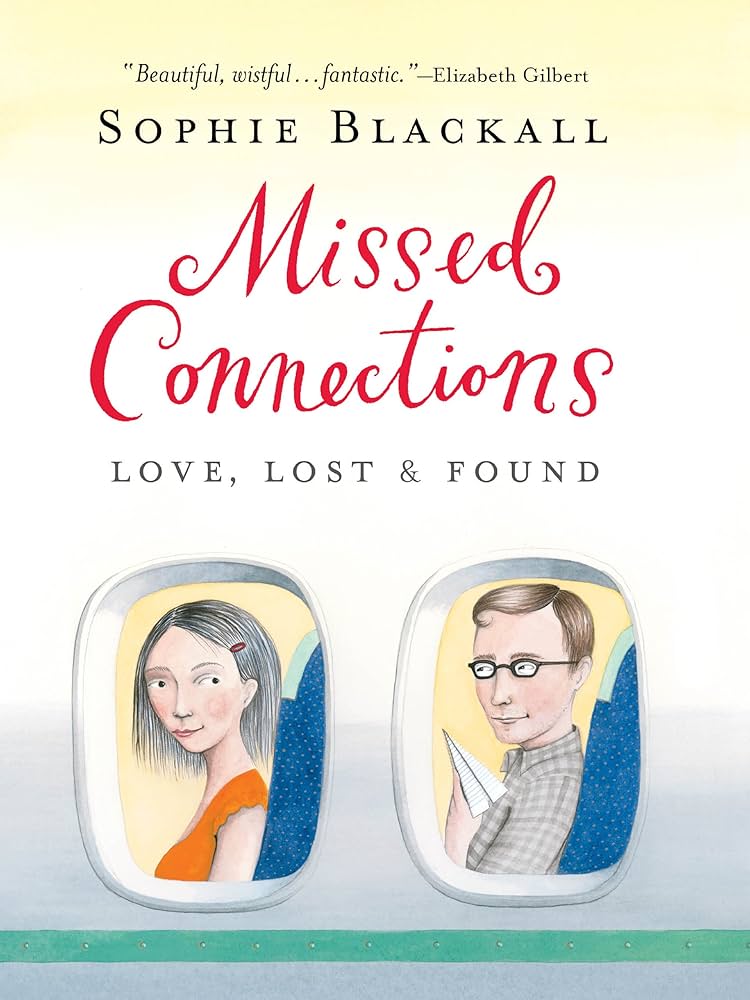
    (a book about Love, Lost & Found, by Sophie Blackall)

    Before dating apps completely gamified modern romance, there was the Craigslist “Missed Connections” section—a digital bulletin board of longing, serendipity, and fleeting glances.
    In her 2011 illustrated book Missed Connections: Love, Lost & Found, acclaimed illustrator Sophie Blackall rescues these anonymous pleas from the depths of the internet and elevates them into beautiful, poignant works of art.

    Here is a breakdown of what makes this collection so special.

    The Premise: Turning the Mundane into Magic

    The concept of the book is brilliantly simple. Blackall combed through real “Missed Connections” ads from Craigslist and paired the exact text of the posts with her own original illustrations. The ads range from the deeply romantic to the delightfully bizarre.

    Whether it’s a shared smile on a crowded subway, a locked gaze through a coffee shop window, or a peculiar encounter involving a bear suit, Blackall treats each snippet of text with the utmost respect. She gives physical form to the anonymous “You” and “Me” in these posts, transforming brief, transient moments into permanent, whimsical stories.

    The Art and Aesthetic

    Blackall’s artistic style is the true star of the book. Utilizing her signature delicate lines, soft watercolors, and vintage-inspired aesthetic, she brings a gentle humanity to the often clinical landscape of the internet.

    • Attention to Detail: She captures the specific quirks mentioned in the ads—a bright red scarf, a specific book someone was reading, or a clumsy moment—making the subjects feel incredibly real.
    • Whimsy and Warmth: Even the stranger or slightly creepier ads are softened by Blackall’s brush. She finds the inherent sweetness and humor in human awkwardness, casting a warm, empathetic light on the universal desire to connect.

    Emotional Impact: A Tapestry of Longing

    Reading Missed Connections is a surprisingly emotional experience. It serves as a beautiful reminder of how closely we live alongside strangers and how easily a life-altering romance can pass us by.

    The book evokes a profound sense of sonder—the realization that every random passerby has a life as vivid and complex as your own. While some entries will make you laugh out loud at their sheer absurdity, others will leave you with an ache in your chest for the lovesick writers hoping against hope that their crush happens to check the internet that day.

    Who Should Read This?

    • Hopeless Romantics: If you love the idea of fate, serendipity, and love at first sight, this book is a visual love letter to those concepts.
    • Art and Design Lovers: Blackall is a Caldecott Medal-winning illustrator for a reason. The book is a beautiful object, perfect for a coffee table.
    • People-Watchers: Anyone who enjoys sitting on a park bench and imagining the backstories of the people walking by will find a kindred spirit in this collection.

    Final Verdict

    Missed Connections: Love, Lost & Found is a charming, bittersweet, and visually stunning time capsule. Sophie Blackall captures the vulnerable, messy, and beautiful reality of human yearning. It is a quick read, but the illustrations and the quiet desperation of the anonymous authors will stay with you long after you close the cover, making you look just a little bit closer at the strangers you pass on the street.

  • Best Reconnect With Old School Friends App

    Best Reconnect With Old School Friends App

    You remember the hallway before lunch. The inside joke from sophomore year. The friend who moved away, changed numbers, vanished from every group chat, and somehow still lives in your memory like no time passed at all. If you are searching for a reconnect with old school friends app, you are probably not looking for more noise. You are looking for a real way back to someone who once mattered.

    That is a different kind of search than scrolling social media or typing a name into an old alumni page. Reconnecting with school friends is emotional. It carries nostalgia, curiosity, and sometimes a little hesitation. Will they remember you? Are they open to hearing from you? Is there a respectful way to reach out without feeling intrusive? The right app should make room for all of that.

    What makes a reconnect with old school friends app actually good?

    Most platforms were not built for this moment. Social networks are crowded with performance. Dating apps are built for attraction, not history. Class directories can feel frozen in time, useful for records but not for real connection. A strong reconnect with old school friends app needs to do something more human.

    It should start with context. School friendships are tied to places, years, routines, clubs, neighborhoods, bus routes, and tiny details that only make sense to people who lived them. A useful app helps you reconnect through those shared anchors, not just through a search bar.

    It should also respect privacy. That matters more than people admit. Many adults want to reconnect, but they do not want their personal information floating around publicly. They want consent, boundaries, and the chance to respond on their own terms. If an app makes reconnection feel exposed, people will hesitate to use it.

    And yes, it should feel current. No one wants to sign up for something that looks abandoned or asks for too much too soon. If the design feels thoughtful, the posting flow is simple, and the intent is clear, people are far more likely to take the chance.

    Why old school friendships deserve a second chance

    Some friendships do not end because they should. They end because life gets loud.

    Families move. Phones change. One semester becomes another, then a job, then a new city, then ten years. A person who once knew your whole world becomes someone you think about when a song comes on or when you pass a familiar street. That does not make the connection less real. It just means it never got a proper goodbye.

    There is also something uniquely grounding about school friends. They knew you before your polished LinkedIn version. Before your adult scripts. Before you learned how to brand yourself. Reconnecting with them can feel less like networking and more like returning to a piece of yourself.

    That is why this category of app matters. It is not just about finding people. It is about recovering a thread of your own story.

    A better approach than endless searching

    The usual methods are hit or miss. You search a full name and find twenty similar profiles. You wonder if the person got married and changed their last name. You message someone on a platform they barely use. Or worse, you find them instantly and realize the setting makes your message feel strangely public.

    A more thoughtful app flips the process. Instead of asking you to stalk the internet for clues, it lets you post with context. Maybe you mention the high school, graduation year, neighborhood, or a shared memory only the right person would recognize. Maybe you tag a meaningful place where your paths once crossed. That creates something warmer and more natural than a cold search.

    This is where a platform like Once More can feel especially different. It was built around the idea that real-life moments matter, and that connection should begin with place, timing, and mutual recognition rather than polished profiles. While many people know it for missed encounters, that same design logic also makes sense for reconnecting with former classmates. Shared places carry memory. Sometimes the map is what brings the person back.

    How to use a reconnect with old school friends app well

    The best results usually come from being specific, but not overwhelming. If you are posting to reconnect with an old classmate, think less like a detective and more like a person opening a door.

    Start with details that create recognition. Mention the school name, the years you were there, and one or two memory markers that feel genuine. Maybe you were in marching band together. Maybe you sat near each other in chemistry. Maybe you both took the same train home. These details do more than identify someone. They remind them that this is real.

    Your tone matters too. Keep it warm, simple, and pressure-free. Something like, I have wondered how you are doing and would love to reconnect if you are open to it, works better than anything too intense. Nostalgia is powerful, but it lands best when it leaves room for the other person to choose.

    Patience also helps. Not everyone checks apps every day. Not everyone is ready to revisit the past immediately. A good platform gives people space to respond in their own time, with privacy safeguards that prevent reconnection from turning into unwanted contact.

    What to look for before you trust any app

    Not every app that promises reunion is built with care. Some are really just ad-heavy directories. Others push users into public visibility too fast. If you are choosing a reconnect with old school friends app, a few things matter.

    First, look for consent-based communication. There should be a clear line between posting a reconnection request and forcing direct access to someone. Mutual choice is not a small feature. It is the difference between a welcome message and an uncomfortable one.

    Second, pay attention to moderation. Manual review and thoughtful community standards can sound boring until you need them. Then they become the reason the app feels safe enough to use.

    Third, consider whether the app supports memory-rich discovery. Place-based posting, school-based context, and time markers are more useful than generic browsing when your goal is to find one person connected to a very specific chapter of life.

    Finally, ask whether the app feels human. Does it encourage sincerity? Or does it push you toward performative profiles and endless swiping? For this kind of reunion, that distinction matters.

    The emotional trade-off no one talks about

    Reconnecting is hopeful, but it is not risk-free. Sometimes the person does not respond. Sometimes they do, and the chemistry is different now. Sometimes the memory was more vivid than the present-day match.

    That does not mean the attempt was a mistake.

    There is courage in making room for unfinished stories. A good app cannot guarantee the ending you want, and it should not pretend to. What it can do is offer a respectful path – one that honors the meaning of the connection without turning it into spectacle.

    And sometimes that is enough. Sometimes the real gift is knowing you tried. Sometimes a short exchange closes a loop you have carried for years. Sometimes it becomes coffee next week. It depends on the people, the history, and the timing.

    When a school friend is really a missed moment from the past

    Not every old school connection was a close friendship. Sometimes it was the person from art class you always meant to talk to more. The classmate from the bus stop. The familiar face in the library who made those years feel less lonely. Traditional reunion platforms do not always make space for those quieter stories.

    A place-based app can. It lets memory do part of the work. You are not forced to build a perfect profile or pitch yourself like a product. You are simply marking a moment, naming a connection, and giving fate a little help.

    That is a gentler way to reconnect. More honest, too.

    If someone from your school years has been sitting in the back of your mind for longer than you expected, maybe that memory is asking for a little movement. Not a grand gesture. Just a thoughtful one. The right app cannot rewrite the past, but it can give it a second chance to meet the present. And sometimes that is where the magic begins.

  • How to Meet People Organically in Real Life

    How to Meet People Organically in Real Life

    You do not usually meet someone remarkable while trying your hardest. It happens when you are reaching for the same oat milk at the corner store, laughing at the same delayed train announcement, or noticing the same dog in the park. That is why so many people are asking how to meet people organically – not through staged profiles and endless swiping, but through real life, where chemistry has a pulse.

    The tricky part is that organic connection is real, but it is not passive. You cannot manufacture fate, but you can make yourself more available to it. In a city, especially, the difference between isolation and unexpected connection often comes down to attention, rhythm, and a little courage at the right moment.

    What it really means to meet people organically

    Organic does not mean accidental in the purest sense. It means the interaction grows out of a real shared context instead of a forced digital setup. You are in the same place for a reason. You notice each other because something genuine is happening. Maybe you both linger after a reading. Maybe you keep seeing each other at the same coffee shop. Maybe there is one fleeting moment on a crosswalk that stays with you longer than it should.

    That is different from treating every public place like a hunting ground. People can feel the difference immediately. Organic connection has a certain lightness to it. There is curiosity, not pressure. Presence, not performance.

    For a lot of people, especially those exhausted by app culture, that difference matters. Swiping can make connection feel like shopping. Real life gives you texture. Voice. Timing. Energy. The weird little details that tell you more than a bio ever could.

    How to meet people organically without forcing it

    The first shift is simple but not easy: become a regular somewhere. Serendipity loves repetition. If your life is made of isolated errands and fast exits, chance encounters have nowhere to land. But when you move through the same coffee shop, bookstore, climbing gym, dog park, or neighborhood market often enough, familiarity starts doing quiet work in the background.

    People trust what feels gently familiar. The person who has seen you reading by the window three Saturdays in a row is already less of a stranger. You do not need a grand opening line when context has already introduced you.

    This is also why interest-based spaces matter more than random crowded ones. Loud bars can work for some people, but they often reward speed and confidence over actual alignment. A ceramics studio, volunteer group, language class, park run, or live music venue gives you more to build on. You are not just two people occupying the same square footage. You are two people sharing attention.

    If you are wondering how to meet people organically, start by choosing places that reflect the life you actually want. The people you meet there are more likely to fit into it.

    Small signals matter more than perfect lines

    A lot of missed connections are not really missed because nobody was interested. They are missed because nobody knew whether the interest was welcome.

    Organic meeting is often about sending clearer small signals. Make eye contact a second longer. Smile when it feels natural. Comment on what is already happening around you. Ask a simple question with an easy exit built into it. The goal is not to impress. It is to open a door without cornering anyone.

    This might sound almost too basic, but basic is where real-world connection lives. The best interactions usually begin with ordinary language. Is this seat taken. Have you tried that one before. That band is better live than I expected. Your dog looks like he owns this block.

    What makes these moments work is not verbal genius. It is emotional accuracy. You are responding to the environment, not delivering a script.

    And yes, timing matters. If someone has headphones in, is rushing, or is giving closed-off signals, let the moment pass. Respect is part of the magic. Organic connection only feels good when both people have room to choose it.

    Build a life that creates repeat encounters

    There is a romantic idea that the right person will simply appear. Sometimes they do. More often, though, meaningful encounters come from a life with enough texture to let them happen.

    That means saying yes to the birthday dinner, the Sunday market, the gallery opening, the friend-of-a-friend rooftop gathering, the neighborhood event you almost skipped. Not because every outing needs to become a meet-cute, but because a socially alive life gives chance more material.

    It also means putting your phone away more often. You cannot notice a glance, a smile, or a natural opening if you are sealed inside your screen. Cities are full of tiny invitations, but they are easy to miss when your attention is elsewhere.

    There is a trade-off here. Being open does not mean being constantly available. You do not owe strangers conversation every time you leave the house. Some days are for solitude. Some moments are not right. Organic connection works best when openness and boundaries coexist.

    Why shared place creates better chemistry

    One reason in-person meeting feels so different is that place itself carries meaning. A conversation on a rainy platform, a laugh in line at a late-night food spot, a glance across a used bookstore – these settings shape the energy of the moment. They make it memorable.

    That memory matters because people are not just drawn to each other. They are drawn to a moment they both inhabited. Shared place creates a kind of emotional timestamp. It gives the connection weight.

    This is part of what many modern platforms get wrong. They try to create connection before context. But often context comes first. You notice someone in real life, and only afterward wish you had a respectful way to continue the conversation.

    That is where a tool like Once More can feel less like replacing reality and more like extending it. If you crossed paths with someone memorable and the moment ended before names were exchanged, a place-based second chance can preserve the authenticity of the original encounter while still honoring privacy and consent.

    How to meet people organically if you are shy

    You do not need to become the loudest person in the room. Shy people often do well in organic settings because they are observant. They notice details. They pick up on mood. They tend to be better at the kind of grounded, context-based conversation that makes strangers feel comfortable.

    The trick is to lower the stakes. Do not make every interaction carry the weight of destiny. Let it be a brief comment. A familiar nod. One question. Then let the exchange breathe.

    It can also help to choose environments that do some of the social work for you. Classes, community events, and hobby groups provide natural structure. You do not have to invent a reason to speak. The reason is already there.

    And if a moment passes, it is not always gone forever. Sometimes cities offer reruns. You see the same person on the same commute, in the same café, at the same Saturday market. Familiarity can build slowly. Organic does not always mean instant.

    The biggest mistake people make

    The biggest mistake is thinking organic means effortless. It does not. It means honest.

    You still have to participate. You still have to look up, go out, return to places you love, and risk a little awkwardness. You still have to accept that not every spark becomes a story. Some people will be unavailable. Some moments will fade. Some glances mean nothing at all.

    But that is part of the beauty, too. Real-life connection is not optimized. It is alive. It has uncertainty. It has atmosphere. It asks for intuition.

    If you want more of it, stop asking where all the good people are and start asking whether your life leaves room to notice them. Wear the outfit that makes you feel like yourself. Become a regular. Linger a little longer. Start smaller conversations. Trust the energy you feel, but respect the signals you get back.

    You are not trying to force magic out of thin air. You are giving it somewhere to land.

  • Why a Dating App Without Swiping Works

    Why a Dating App Without Swiping Works

    You know the feeling. Someone looks up from their book on the train, or smiles across a coffee shop line, and for one suspended second the whole city seems to lean closer. Then the doors open, the light changes, the crowd moves, and the moment is gone. A dating app without swiping exists for exactly that kind of almost.

    This idea matters because a lot of modern dating has drifted away from chemistry and toward cataloging. Swipe culture asks people to make snap decisions from polished photos, clever bios, and a few filtered clues. It rewards speed, performance, and endless comparison. But real attraction does not always arrive as a perfectly lit profile. Sometimes it arrives as eye contact at a crosswalk, a shared laugh in line, or the strange certainty that you just passed someone you were supposed to meet.

    What a dating app without swiping changes

    A dating app without swiping flips the logic of online dating. Instead of browsing strangers from your couch, you try to reconnect with someone you actually crossed paths with in real life. The point is not to manufacture chemistry from a profile. The point is to honor chemistry that already happened.

    That shift sounds small, but it changes almost everything. It lowers the pressure to brand yourself. It makes the experience less about competing for attention and more about recognizing a real moment. It also creates a different emotional tone. Swiping can feel disposable, even when people use it with good intentions. A location-based reconnection model feels more intentional because it begins with presence.

    For people tired of treating dating like a game of sorting faces, that difference is not cosmetic. It is the whole appeal.

    Why swipe fatigue is so common

    Most people do not hate dating apps because they hate meeting people. They hate what the format does to the experience. Swiping trains you to assess and move on, assess and move on, until curiosity starts to flatten into habit. The sheer volume can create the illusion of abundance while making every interaction feel thinner.

    There is also a strange mismatch at the heart of it. In real life, attraction is layered. Voice matters. Timing matters. The way someone carries themselves matters. Context matters. The person who might stop you in your tracks at a bookstore can look completely ordinary in a static profile. Meanwhile, someone with a flawless set of photos can feel distant the second you meet.

    That is why so many users say they are burned out, even if they still want love. They are not rejecting connection. They are rejecting a system that asks them to evaluate human possibility like inventory.

    How a no-swipe model feels more human

    The beauty of a no-swipe app is that it does not ask you to imagine a spark. It starts from one.

    Maybe you saw someone on your morning commute for three weeks and never worked up the nerve to say hello. Maybe you exchanged a glance at a gallery opening and then lost them in the crowd. Maybe you had a brief conversation at a park, a grocery store, or a red light, and later wished you had asked for their name. These are not fantasy scenarios. They happen every day in cities full of people moving quickly and feeling more than they say.

    A platform built around those missed encounters gives those moments a second chance at magic. It also feels gentler than classic dating apps because it centers a real event rather than a broad hunt for matches. You are not announcing yourself to everyone. You are reaching back toward a moment that mattered.

    That said, romantic idealism only works if it is paired with clear boundaries. The best versions of this model understand that privacy, consent, and moderation are not side notes. They are what make the whole thing trustworthy.

    The best dating app without swiping still needs guardrails

    Serendipity is exciting. Safety is nonnegotiable.

    Any app that helps people reconnect after seeing each other in public has to handle that responsibility carefully. That means limiting exposure, protecting identities, reviewing content, and making sure contact only happens when there is mutual willingness. Without those guardrails, a beautiful concept can turn uncomfortable fast.

    This is where the category gets more interesting than the phrase dating app suggests. A thoughtful no-swipe platform is not just removing one mechanic. It is redesigning the emotional contract between the app and the user. Instead of saying, Here are endless people, pick one, it says, Tell us about the moment, and we will help you look respectfully.

    That respectful part matters. A missed connection should feel hopeful, not invasive.

    Who this works best for

    Not everyone wants this kind of dating experience, and that is fine. If you prefer to browse widely, compare options, and set up dates with people outside your daily world, traditional apps may still fit your habits better.

    But for a certain kind of person, this model feels instantly right. It speaks to people who still believe attraction can begin before anyone says a word. It makes sense for city dwellers who are constantly brushing past strangers on trains, sidewalks, campuses, in cafés, and at events. It is especially appealing to people who are tired of performative profiles and want a more grounded path to connection.

    It can also be useful beyond romance. Real-world reconnection tools can help with finding an old classmate, tracking down someone you meant to thank, or recovering a lost item through community visibility. That broader usefulness gives the platform a different social texture. It becomes less of a marketplace and more of a living map of human moments.

    What to look for in a dating app without swiping

    If you are curious about trying one, the details matter. A strong app in this space should make it easy to mark the place and time of an encounter without forcing you to reveal too much. It should explain how communication works, what consent looks like, and how reports or moderation are handled. You should feel the presence of care behind the interface.

    The tone matters too. If the app treats your moment like disposable content, it misses the point. If it leans too dreamy without explaining the rules, that is a problem as well. The sweet spot is romantic but grounded – emotionally open, practically clear.

    That balance is part of what makes Once More compelling in this category. It is built around the idea that real-life chemistry deserves a respectful follow-up, not a forced replacement. The app removes the usual profile theater and puts the focus back on place, timing, and the possibility that a brief encounter might deserve another chance.

    How to use this kind of app well

    Success here is less about volume and more about honesty. Be specific about the moment you are trying to reconnect with. Mention the setting, the timing, and the detail that made it memorable, but do not overshare identifying information. You are painting enough of the scene for recognition, not writing a surveillance report.

    It also helps to stay emotionally realistic. Not every missed glance is destiny, and not every post will lead to a reply. That does not make the effort embarrassing. It makes it human. Part of the charm of this model is that it allows room for hope without pretending hope is a guarantee.

    If a connection does happen, move with the same respect that made the app appealing in the first place. Keep the first exchange considerate. Let mutual interest reveal itself. Chemistry may have sparked in public, but trust still has to be built one step at a time.

    Why this shift matters now

    A lot of people are quietly craving a return to something less staged. Not less digital, exactly, but less detached. They want technology to support real life, not replace it. They want a tool that helps them recover the moments they actually felt something, instead of asking them to scroll until they feel numb.

    That is why the rise of the dating app without swiping feels bigger than a niche feature trend. It points to a different philosophy of connection. One that says romance does not have to start with self-promotion. One that trusts eye contact, timing, place, and mutual curiosity. One that gives the city back some of its mystery.

    If you have ever replayed a fleeting encounter all the way home, wondering what might have happened if one of you had spoken, you do not need more swipes. You need a thoughtful way to return to the moment – and see whether it was just a passing glance or the beginning of something worth finding again.

  • Best App to Reconnect With a Stranger

    Best App to Reconnect With a Stranger

    You know the feeling because it happens fast. A look across a train platform. A laugh shared in line at a coffee shop. A quiet spark at a crosswalk before the light changes and life keeps moving. If you have ever searched for an app to reconnect with stranger moments that slipped through your hands, you are not really looking for more screen time. You are looking for a second chance.

    That is what makes this category different from dating apps, social media, and old-school missed connections boards. The point is not to browse strangers from your couch. The point is to find the person you already crossed paths with in real life, without turning the experience into a performance.

    What makes an app to reconnect with a stranger actually work?

    The best version of this idea starts with something simple and rare: a real-world encounter. Not a polished profile. Not a clever opening line written for ten different people. A moment that already happened.

    That changes everything.

    When an app is built around reconnecting after an in-person encounter, it needs to do three things well. First, it has to help you mark the time and place of the moment with enough precision to make a match possible. Second, it has to protect privacy so nobody feels exposed just because they were noticed in public. Third, it has to keep communication mutual and consent-based, because romance feels magical right up until it feels invasive.

    A lot of platforms get one of these right and miss the others. Some are good at location, but too loose on boundaries. Others are safe, but so abstract that they lose the emotional reason people came in the first place. The strongest apps understand that serendipity and safety are not opposites. They need each other.

    Why people want an app to reconnect with stranger encounters

    Most people are not trying to manufacture a fantasy. They are trying to recover a very specific moment.

    Maybe you sat across from someone on the subway and kept catching each other smiling before one of you stepped off at Canal Street. Maybe someone helped you lift a stroller up a station staircase and you never got their name. Maybe you saw the same person twice in the same bookstore and thought, if fate is trying this hard, maybe I should meet it halfway.

    These moments carry a different kind of energy because they were unscripted. There was no profile to study and no expectation to impress. You noticed each other as actual people moving through actual life. That kind of chemistry is hard to fake, which is exactly why it matters.

    There is a practical side too. Sometimes the stranger is not romantic at all. It might be the classmate you recognized too late at a street fair, or the person who found your lost wallet, or someone from your neighborhood whose face you know but whose name you missed. A good reconnection app can hold all of that without flattening every interaction into dating.

    How this differs from dating apps

    Swipe culture trained people to treat connection like inventory. More photos, more filters, more choices, less meaning. That model can be efficient if your goal is volume. It is not great if your goal is authenticity.

    An app built to reconnect after real life flips the order. The encounter comes first, the app comes second. That is a subtle shift, but it creates a very different emotional experience. You are not deciding whether you like a stranger based on their curated profile. You are following up on a feeling that already happened in the wild.

    There are trade-offs, of course. This kind of app will never offer the endless pool that mainstream dating apps do, because that is not the point. The pool is smaller by design. It depends on timing, geography, and whether the other person also wants to be found. If you want instant abundance, this may feel slower. If you want something that feels more human, slower can be a feature.

    The features that matter most

    If you are deciding whether an app in this space is worth using, pay attention to the mechanics behind the romance.

    Location and timing should be precise, not creepy

    The app should let you tag a place and moment clearly enough to identify the encounter, but not reveal your live whereabouts in a way that compromises your safety. There is a difference between saying you crossed paths near a café at 8:15 a.m. and broadcasting your exact movements in real time. Good design knows the difference.

    Privacy should be built in from the start

    Photo-free or low-profile environments can be a real advantage here. When the whole point is reconnecting through a shared moment, you do not need to turn people into products. Fewer public-facing details can reduce judgment, posturing, and unwanted attention.

    Consent has to be mutual

    This is not negotiable. The best apps create a structure where both people need to opt in before a real conversation opens up. That preserves the thrill of possibility without crossing lines.

    Content review matters more than people think

    Manual moderation may sound unglamorous, but it can make the difference between a platform that feels hopeful and one that feels chaotic. If people are posting about specific places and encounters, there needs to be oversight. Safety is part of the atmosphere.

    How to use an app to reconnect with a stranger well

    The impulse is emotional, but your post should still be grounded. Think cinematic, not vague.

    Start with the real details: where it happened, roughly when, and what made the moment recognizable. Mention the green coat, the missed train, the joke about oat milk, the shared wait at the red light. Give enough texture that the right person can recognize themselves, but do not overshare personal details that would make either of you uncomfortable.

    Keep your tone warm and respectful. The best messages feel like an invitation, not a demand. You are saying, if that moment meant something to you too, here is a gentle way to find each other again.

    It also helps to act quickly. Memory fades, and so does context. If you are going to post, do it while the details still glow.

    Who this kind of app is really for

    This works best for people who are open, observant, and a little bit brave. Not loud. Not performative. Just willing to trust that a meaningful encounter is worth following up on.

    City life is full of almosts. You can share a neighborhood with thousands of people and still feel like everyone is passing through glass. An app like Once More makes the city feel softer around the edges. It gives missed moments a place to land.

    That said, it is not for everyone. If you dislike uncertainty or want immediate conversation with dozens of matches, the experience may feel too delicate. Reconnection apps rely on timing and mutual recognition. Sometimes the answer is yes. Sometimes the story remains beautiful because it was brief.

    A better standard for modern connection

    The real promise of this category is not just romance. It is that technology can support human chemistry instead of replacing it.

    For years, apps have asked people to perform themselves before they ever meet. Curate your face. Write your pitch. Compete for attention. But many of the moments we remember most did not begin with performance. They began with presence. Eye contact. Timing. A strange little sense that something passed between two people.

    An app to reconnect with stranger encounters should honor that. It should help you power up your serendipity without stripping the magic out of it. It should make room for hope while protecting your boundaries. It should feel like a bridge back to real life, not an escape from it.

    If you have been holding onto one missed moment longer than you expected, maybe that means it mattered. Not every spark becomes a story. But sometimes all a story needs is one honest chance to continue.

    And if there is a respectful way to offer that chance, why let the train doors close on it twice?

  • How to Post a Missed Connection That Gets Seen

    How to Post a Missed Connection That Gets Seen

    You keep replaying the moment. The shared smile on the train. The stranger who held the door and said something funny. The person across the coffee shop who looked up at exactly the right time – and then the light changed, the stop arrived, the crowd moved, and that was it. If you are wondering how to post a missed connection, the goal is not to sound dramatic or vague. It is to make the moment recognizable to the right person while keeping it respectful, safe, and real.

    A good missed connection post sits in a very specific sweet spot. It should feel personal enough that the other person instantly knows it might be about them, but not so detailed that it crosses a line. It should carry the spark of what happened, without turning a fleeting encounter into a public dossier. That balance matters, especially if you want a second chance at magic without making anyone feel exposed.

    How to post a missed connection without sounding creepy

    The biggest mistake people make is trying to prove they were paying close attention. That instinct is understandable. You want to be found. But the more intensely descriptive you get, the more the post can shift from romantic to unsettling.

    Instead of listing every physical detail, anchor the post in shared context. Think location, timing, and one memorable beat from the interaction. Maybe you were both stuck waiting for the downtown F train. Maybe you reached for the same oat milk at the grocery store and laughed. Maybe there was no conversation at all, just repeated eye contact during a rainstorm outside a bookstore.

    That kind of detail does two things. First, it helps the right person recognize the moment. Second, it keeps the focus where it belongs – on the encounter itself, not on surveillance-level observation.

    Tone matters too. A missed connection post should sound warm, calm, and grounded. If it feels entitled, demanding, or overly intimate, the energy is off. The best posts leave room for consent. They say, in effect, I felt something too, and if you did, here is a respectful way to reconnect.

    What to include in a missed connection post

    When people ask how to post a missed connection, they are usually really asking what information is enough. You do not need much, but what you include should be specific and useful.

    Start with the where and when. Be as accurate as you can without overloading the post. A neighborhood, venue, train line, or intersection is often enough. Add a day and a rough time window. That alone narrows the memory in a natural way.

    Then include the moment that made it memorable. This is the heart of the post. It could be a sentence you exchanged, an awkward funny thing that happened, or a visual detail tied to the setting rather than their body. Spilled iced coffee. Matching umbrellas. The dog that tried to sit on your shoes. These details feel human. They bring the moment back to life.

    Finally, add a soft invitation. Not pressure, not a grand declaration. Just a simple line that signals openness. Something like: if this sounds like you and you would like to say hi, I would love to hear from you. That keeps the door open without pushing anyone through it.

    What not to include

    There is a difference between vivid and invasive. If you want your post to land well, leave out anything that could identify the person too easily in public. Full names, workplace details, exact commute patterns, license plates, or descriptions that read like you memorized their every movement are not romantic. They are too much.

    It is also smart to avoid assumptions. Do not write as though fate has already decided the ending. You can believe in serendipity and still stay grounded. The person may remember the moment differently. They may not be available. They may not want contact. Respect is part of what makes a post worth answering.

    And skip recycled internet language. If your post sounds like a stunt, a pickup line, or a public performance, it loses the honesty that makes missed connections special. The strongest posts sound like one person talking to another, not like an ad for themselves.

    A simple formula for how to post a missed connection

    If you freeze up when it is time to write, use a structure. Not a stiff template – just a clean rhythm.

    Open with the setting. Move into the shared moment. End with a gentle invitation.

    For example, say you saw someone at a late-night bookstore in Brooklyn on Friday. You could write: We were in the poetry aisle around 8 pm, both reaching for the same collection at the same time. You smiled and told me to take it, and I have been thinking about that tiny, perfect moment ever since. If this was you and you would like to reconnect, I would be happy to hear from you.

    That works because it is clear, restrained, and believable. It gives enough to trigger recognition without turning the post into a fantasy monologue.

    Why location and timing make all the difference

    Missed connections live or die by context. Real-world chemistry is powerful because it happened somewhere, at a particular moment, under particular conditions. That is why place-based posting works so well for this kind of reconnection.

    A coffee shop at 8 am feels different from a rooftop bar at midnight. A shared glance in an airport carries a different energy than a conversation at a farmer’s market. If you can tag the place and moment accurately, you are not just posting into the void. You are giving serendipity coordinates.

    That also helps keep the experience more intentional than swipe culture. Instead of browsing faces and bios, you are tracing the outline of something that actually happened. That is a very different kind of beginning. It asks less for performance and more for presence.

    How to post a missed connection safely

    Romance is not an excuse to ignore boundaries. In fact, the most meaningful encounters usually begin with them intact.

    If you are posting through an app or platform, choose one that respects privacy and consent. That means no public oversharing, no pressure to reveal personal information immediately, and no open season on strangers’ identities. A thoughtful platform should make reconnection possible without making anyone feel cornered.

    You should also check your own intentions before posting. Are you trying to reconnect because the moment felt mutual and memorable, or because you regret not acting quickly enough and now want control over the outcome? Those are different impulses. A missed connection post works best when it offers a chance, not a demand.

    If the other person responds, keep the same energy. Start light. Reference the shared moment. Let trust build at a normal human pace. The point is not to force destiny. It is to give it room.

    When a missed connection is worth posting

    Not every passing attraction needs a post. Sometimes a glance is just a glance. Sometimes the magic is in the brevity. Knowing the difference is part of the art.

    A missed connection is worth posting when there was a genuine point of recognition – eye contact that lingered, a conversation that got cut short, an unexpected sense that something real had just brushed past you. It is less about whether the person looked good and more about whether the moment felt alive.

    This is also why missed connections are not only about dating. People use them to reconnect with someone kind who helped them on a rough day, to find an old classmate recognized by chance, or to recover a lost item through a shared location and time. The thread running through all of it is simple: something meaningful happened in the real world, and it deserves one more chance.

    The best missed connections sound like real life

    The internet has trained people to brand themselves, overexplain, and chase attention. A missed connection should resist all of that. It should sound like a real person still a little stunned by a real moment.

    If you are using a platform built for location-based reconnection, like Once More, lean into that honesty. Keep the story close to the place it happened. Let the setting carry some of the meaning. You do not need to manufacture intensity when the encounter already had it.

    A quiet, well-written post often does more than an elaborate one. It tells the other person you noticed them, but you also understand boundaries. It says the moment mattered, but so does their comfort. That combination is rare, and people can feel it.

    So if a face, a laugh, or a few suspended seconds have stayed with you longer than expected, write the post. Keep it clear. Keep it kind. Give the memory a place to land. Sometimes all a meaningful encounter needs is one thoughtful signal sent back into the city.

  • What Makes a Consent Based Dating App Work?

    What Makes a Consent Based Dating App Work?

    You lock eyes with someone on the train. There is a smile, maybe a pause, maybe that tiny shift in the air that feels like possibility. Then the doors open, the crowd moves, and the moment is gone. A consent based dating app exists for exactly this kind of almost – not to turn strangers into targets, but to give real-world chemistry a respectful second chance.

    That difference matters. Most dating apps are built around availability, visibility, and speed. You browse faces, make snap judgments, and start conversations with people you have never actually met. A consent based dating app flips that rhythm. It starts with a real encounter or a mutual willingness to connect, then builds in boundaries that protect both people along the way.

    What a consent based dating app really means

    At its core, a consent based dating app is designed so that communication happens only when both people choose it. That sounds obvious, but many platforms treat access as the default. If someone can find your profile, they can usually message you, react to you, or push for attention in ways that feel intrusive fast.

    Consent-centered design changes the emotional temperature of the whole experience. Instead of asking, “How can we increase messages?” it asks, “How do we make sure contact is wanted?” That usually means users are not endlessly exposed to strangers, personal details are limited, and any path to conversation requires mutual action.

    For people tired of performative dating culture, this feels like a relief. You do not have to market yourself like a brand. You do not have to post your face for constant evaluation. You do not have to wonder whether a message came from genuine recognition or random volume. The app becomes less about being discovered by everyone and more about reconnecting with the right person, at the right time, for the right reason.

    Why swipe culture made consent harder, not easier

    Swiping promised efficiency. In practice, it often created emotional noise.

    When dating apps center profiles, photos, and infinite browsing, they encourage a mindset of access. People begin to assume that if you are on the platform, you are available for review. That is not the same as consent. Being present in a digital space does not mean being open to every comment, every cold message, or every attempt to force intimacy.

    This is where a consent based dating app offers something more human. It narrows the context. Maybe you passed someone in a coffee shop. Maybe you shared a look at a crosswalk. Maybe you met briefly at an event and froze before asking for a number. These are not random digital impressions. They are moments grounded in reality, memory, and place.

    That grounding changes behavior. People tend to approach with more intention when the connection is tied to a lived experience instead of a profile carousel. The tone becomes less transactional. There is less pressure to perform and more space to recognize, remember, and choose.

    The best consent based dating app features are quiet, not flashy

    The strongest trust features rarely look glamorous in a marketing screenshot. They work in the background, shaping the experience before anything uncomfortable happens.

    Mutual opt-in is the first piece. Neither person should be pushed into direct contact without both sides making an active choice. That can happen through matching, response gates, or place-based reconnection systems that only open communication after clear interest is returned.

    Privacy is the second. A consent-first app should reveal only what is necessary, when it is necessary. That may mean limited personal information, fewer public-facing profile elements, or location tools that are carefully structured around a moment rather than continuous tracking. There is a big difference between remembering where you crossed paths and broadcasting where someone is.

    Manual review also matters more than people think. If a platform invites users to post about missed encounters, old school friends, or personal moments in public spaces, moderation is not a side feature. It is part of the promise. Human review helps filter out creepy, invasive, or identifying content before it becomes someone else’s problem.

    Then there is pacing. A good consent based dating app does not rush people from curiosity to exposure. It gives users a way to signal interest, wait, and proceed only if the feeling is mutual. That slower rhythm is not friction for the sake of friction. It is how trust is built.

    Why real-world chemistry changes the entire equation

    There is a certain kind of magic that happens before a single word is exchanged. Not fantasy – recognition. The person reading by the window at your favorite café. The one who laughed with you when the subway stalled. The stranger at the stoplight who felt strangely familiar for ten seconds.

    Traditional apps try to simulate chemistry through filters, prompts, and curated self-description. Sometimes that works. Often it does not. Real-life presence still tells us things a profile cannot. Energy. Timing. Ease. Attention. The way someone occupies a room. The way a moment feels in your body before your brain starts editing it.

    A consent based dating app rooted in offline encounters respects that truth. It does not ask users to manufacture attraction from a checklist. It gives them a way to follow up on something that already happened, without violating anyone’s boundaries in the process.

    That is why this model can feel more romantic and more responsible at once. It gives serendipity structure. It says yes, moments matter – and no, wanting a second chance does not entitle you to someone else’s access.

    Who this kind of app is actually for

    Not everyone wants to meet through a missed connection. Some people prefer the clarity of a standard dating app, where everyone arrives with the same explicit intention. There is nothing wrong with that.

    But a consent based dating app makes sense for people who still believe attraction can begin in the physical world. It suits city people, commuters, café regulars, concert-goers, and anyone whose life is full of passing encounters that feel meaningful for a second and unfinished after. It also appeals to users who want less exposure online and more control over who can reach them.

    It can even stretch beyond romance. The same framework that helps two strangers reconnect after a fleeting moment can help old classmates find each other again or communities recover lost items with more trust and accountability. The thread connecting all of it is intentional contact, not open access.

    What to look for in a consent based dating app

    If you are choosing one, pay attention to the philosophy under the features. Does the app reward volume, visibility, and constant engagement, or does it protect timing, privacy, and mutual interest?

    Look at how contact begins. If anyone can message anyone, it is not especially consent-forward, no matter what the branding says. Look at how much personal information is exposed upfront. Look at whether location is handled with care. Look at how the platform responds to reports, suspicious posts, and edge cases where “romantic” can slide into invasive.

    The strongest apps also understand that desire and boundaries are not opposites. They know people want excitement, fate, and second chances at magic. They also know that none of those things should come at the cost of feeling watched or cornered.

    That balance is where platforms like Once More feel different. The idea is not to replace real life with more screen time. It is to extend a real encounter, gently, and only if both people want the story to continue.

    The future of dating might feel more human, not more digital

    For years, dating apps chased scale by giving people more profiles, more filters, more messages, more exposure. But more is not always better. Sometimes it just creates distance from the very thing people are looking for – a connection that feels real.

    A consent based dating app points in another direction. It suggests that technology does not need to dominate romance to support it. It can simply hold the door open after a moment that already mattered.

    If that sounds softer than the usual dating app pitch, good. Romance is soft sometimes. So is trust. The best platforms know that the spark is only half the story. The other half is making sure it has room to grow without pressure, without performance, and without crossing a line.

    Some encounters are meant to stay a memory. Others deserve a respectful way back. The right app helps you tell the difference – and gives serendipity somewhere safe to land.

  • What a Geo Tagged Social App Should Feel Like

    What a Geo Tagged Social App Should Feel Like

    You know the moment. A glance across a train car. A smile in line for coffee. A stranger at a crosswalk who felt oddly familiar, like your day had briefly opened a hidden door and then shut it again. A geo tagged social app exists for that exact ache – not for endless browsing, not for polishing a persona, but for giving real life one more chance to speak.

    That distinction matters. Most social platforms ask you to perform before you connect. Most dating apps ask you to judge before you meet. A location-based app built around geo-tagged moments flips that logic. It begins with a place, a time, and a real encounter. The point is not to manufacture chemistry on a screen. The point is to honor the chemistry that may have already happened in the wild.

    Why a geo tagged social app feels different

    At its best, a geo tagged social app is not trying to replace human spontaneity. It is trying to protect it. It gives structure to the moments that usually disappear because life moves fast, trains arrive, traffic changes, friends pull you in another direction, or shyness wins by a second.

    That makes the emotional texture very different from swipe culture. On a swipe-first app, attention is cheap and people are interchangeable. On a place-based app, attention is specific. You are not saying, “show me anyone.” You are saying, “I was here, at this time, and someone mattered enough for me to try.”

    There is romance in that, yes, but there is also accountability. A real-world anchor changes behavior. It tends to attract people who are less interested in collecting matches and more interested in meaningful encounters. That does not make every interaction magical. It does make the intent clearer.

    The best geo tagged social app starts with a real moment

    A good location-based social product should feel like a bridge, not a stage. The user experience should begin with a simple act: tagging the place and moment where something happened. Maybe it was a bookstore, a subway platform, a rooftop event, or a stoplight where two cars paused long enough for eye contact and a grin.

    From there, the app should help you describe the encounter without turning it into a performance. That means the post or tag needs enough detail to be recognizable, but not so much that it becomes invasive. The sweet spot is emotional clarity with practical restraint. “You were wearing a red scarf at the record store around 6:15” says enough. A detailed physical breakdown or personally identifying information says too much.

    This is where many apps get the balance wrong. If the process is too vague, nothing meaningful gets recovered. If it is too revealing, the app stops feeling safe. The best products understand that longing and boundaries have to coexist.

    Privacy is not a side feature

    If an app is built around public encounters, privacy cannot be treated like a fine-print add-on. It has to shape the whole experience.

    That starts with not encouraging people to build a polished public identity just to be seen. Profile photos, long bios, follower counts, and swipe metrics can turn a tender premise into another marketplace of attention. Removing some of those performance cues can make room for something more honest. It invites users to focus on the moment itself rather than on packaging themselves for strangers.

    Consent matters just as much. A responsible geo tagged social app should never force immediate exposure between two people. Communication should happen only if there is mutual interest and a clear path to opt in. Manual review and moderation also matter more than many founders want to admit. Serendipity needs guardrails. Without them, the same feature that creates a second chance at magic can also create discomfort.

    The ideal experience feels hopeful but grounded. It says, yes, put your heart on the line a little – but do it in a space designed to protect everyone involved.

    It is not just for romance

    The missed-connection use case is the headline because it is emotionally vivid. But a geo tagged social app becomes much more useful when it serves other real-world reconnection moments too.

    Maybe you recognized someone from school at a street fair and froze before saying hello. Maybe you left a bag at a cafe and want to reach the local community quickly. Maybe you met someone at a pop-up market, had a warm five-minute conversation, and then got swept off in opposite directions. These situations are different in tone, but they share the same core need: place-based reconnection with context.

    That breadth is a strength, not a distraction. It lets the app become part of everyday city life rather than a niche novelty for romantics only. The emotional center can still be destiny, chemistry, and timing. The product becomes stronger when it also solves practical human problems.

    What users actually want from this kind of app

    People who are drawn to a geo tagged social app are usually not asking for more screen time. They are asking for a better relationship with chance.

    They want a respectful way to act on a moment that felt real. They want an app that does not reduce attraction to filters and one-liners. They want to protect their privacy while still leaving a door open. And most of all, they want the process to feel human.

    That means the interface should be simple, fast, and emotionally legible. If someone is posting after a fleeting encounter, they are already vulnerable. They do not want ten confusing settings and a maze of options. They want to mark the moment, say what happened, and trust that the platform will handle the rest responsibly.

    The best products in this space understand the mood of the user. Sometimes they are excited. Sometimes they are embarrassed. Sometimes they are trying to be brave before the feeling fades. Design that respects that emotional state will always outperform design that chases novelty for its own sake.

    Where a geo tagged social app can go wrong

    The idea is beautiful, but beauty alone does not make a good product. There are trade-offs.

    Location specificity is useful, but if it is too precise, it can feel unsettling. Timing matters, but if posts stay visible forever, they lose their immediacy and create risk. A city-by-city rollout can build local density, but a thin user base in too many places makes the experience feel empty.

    There is also a cultural challenge. Some users hear “location-based” and assume surveillance. Others hear “missed connections” and assume chaos. A thoughtful app has to explain itself clearly. It has to show that this is not about tracking people, and not about encouraging reckless contact. It is about offering a consent-based second chance rooted in a real shared environment.

    That is why tone matters as much as technology. If the brand voice feels creepy, flippant, or too transactional, the whole premise collapses. But if it feels warm, clear, and protective, people understand the difference immediately.

    What the future of connection could look like

    A lot of digital life has trained us to think abundance is the same as possibility. More profiles. More messages. More noise. But many people are tired of being perceived at scale and still feeling unseen.

    A place-based social app offers a quieter answer. It says maybe connection does not need more volume. Maybe it needs more context. Maybe the right person was not hidden by an algorithm. Maybe they were already there, on your block, in your favorite cafe, sharing the same rainstorm, concert, commute, or lucky red light.

    That is why the category has emotional power. It does not ask users to believe in fantasy. It asks them to trust what they already felt in real life. Then it gives that feeling a structure strong enough to hold it.

    For brands like Once More, that philosophy matters because it turns technology back toward something deeply human. Not performance. Not gamified attraction. Not endless availability. Just a thoughtful way to power up your serendipity while honoring privacy, consent, and timing.

    The best geo tagged social app should leave you feeling a little braver about the world outside your screen. Not because every missed moment will turn into something, but because some of them finally can.

  • How to Find Someone You Met Briefly

    How to Find Someone You Met Briefly

    You get off the train, walk half a block, and realize it too late – the person with the kind eyes, the shared laugh, the almost-conversation is gone. If you are wondering how to find someone you met briefly, the real challenge is not just locating them. It is doing it in a way that honors the spark, respects their privacy, and gives chance a fair second shot.

    Some missed connections are just that – a passing moment, beautiful because it was brief. Others stay with you for days. The coffee shop stranger who handed back your dropped scarf. The person beside you at a gallery opening who made one perfect joke. The fellow commuter you kept noticing every morning until one day they were gone. When a moment feels unfinished, the instinct to search makes sense. What matters is how you search.

    How to find someone you met briefly without crossing a line

    The best approach is specific, calm, and respectful. Grand internet detective work might sound romantic in theory, but in practice it can get invasive fast. A better path starts with details you actually know and places where a reconnection would feel natural.

    Begin with the facts you remember clearly. Where were you? What day and approximate time? What happened between you? Did you speak, make eye contact, help each other, or share a small interaction others might remember? These details matter more than trying to guess their full identity from almost nothing.

    That distinction is important. There is a difference between saying, “I met someone at a bookstore in SoHo around 6 p.m. on Thursday and we talked near the fiction table,” and trying to hunt down every possible person who fits a vague description. The first invites recognition. The second turns a real-life moment into surveillance.

    Start with the place the moment happened

    If you want a second chance at magic, start where the first chance happened. Real-world encounters are tied to real-world settings, and that gives you a natural advantage.

    Go back if it makes sense. Not constantly, and not in a way that disrupts your life, but thoughtfully. If the person was at a neighborhood cafe on a Tuesday morning, there is a decent chance they are part of that rhythm. If you met at a recurring event, farmers market, coworking space, or train platform, timing may matter as much as location.

    There is a trade-off here. Returning to the same place can be effective because habits are real. But you should not build a fantasy around repetition. A place is a clue, not a promise. Give it a couple of reasonable tries, then widen your approach.

    If the moment happened at a business, you can also ask a simple, limited question to staff if appropriate. Keep it light and non-pressuring. Something like, “I had a brief conversation with someone here the other day and wanted to leave a note in case they come back. Is that allowed?” This works better than asking employees to identify someone for you, which puts them in an uncomfortable position and often crosses privacy boundaries.

    Use community posts, not personal digging

    One of the safest ways to reconnect is to make yourself findable rather than trying to expose someone else. That means posting a clear, time-and-place-based message in a setting designed for missed connections or local community interaction.

    This is where a location-based platform can feel more human than social media sprawl. Instead of scanning endless profiles and hoping a face appears, you anchor the moment itself – the intersection, the station, the rooftop bar, the concert line. The memory becomes the signal.

    A strong post is specific enough for the right person to recognize and vague enough to protect everyone involved. Mention the setting, the time window, and one harmless detail about the interaction. Skip overly intimate assumptions. Skip anything that reveals private information. You are not trying to prove you can identify them. You are trying to make it easy for them to identify the moment if they want to.

    For example, “We shared a table during the rainstorm at a cafe in Williamsburg on Friday around 4 p.m. You joked that the weather had main-character energy. If you remember me too, I would love to say hi.” That feels warm, grounded, and consent-friendly.

    Write the kind of message you would want to receive

    This is the part people often rush, and it changes everything. The tone of your message decides whether your search feels inviting or unsettling.

    Keep it short. Be honest about the encounter. Say why it stayed with you without making the other person responsible for a fantasy. A missed connection is compelling because it is unfinished, but that also means you do not actually know this person yet.

    That is why softer language works better than certainty. “I enjoyed our conversation” lands better than “I know we had something special.” “If you are interested” is better than “I need to find you.” Romance breathes better when it leaves room.

    If you use an app built for these moments, the same rule applies. Post with hope, not entitlement. The best reconnections happen when both people feel free to respond, not cornered into it.

    Be careful with social media searches

    Yes, social media can help. It can also turn a sweet idea into a strange one very quickly.

    If you have a legitimate mutual context – a public event page, a venue account, a shared community group – it may be reasonable to look there. Maybe you both attended the same reading, pop-up, or neighborhood run club. In those cases, searching the event ecosystem is not wildly different from checking the place again in person.

    What gets shaky is trying to reverse-engineer someone from fragments. Searching every tagged post in a neighborhood, zooming in on strangers, or messaging multiple people who merely resemble the person you saw is usually a bad move. It creates collateral discomfort, and it often fails anyway.

    A good test is simple: are you increasing the chance of mutual recognition, or are you forcing identification? If it is the second one, stop.

    How to find someone you met briefly in a way that protects privacy

    Privacy is not the enemy of romance. It is what makes real connection possible. People are more likely to respond to a missed connection when they know they are not stepping into something chaotic.

    That means you should avoid posting full physical descriptions, workplaces, commute routes, or anything that could expose the person to unwanted attention. You also should not recruit your entire internet following to help track them down. What feels thrilling to you may feel unnerving to them.

    Consent matters at every stage. The right system lets someone recognize the moment and choose whether to reply. It does not drag them into visibility before they are ready. That is one reason location-based, consent-first tools feel different from swipe culture. They preserve the magic of the encounter without reducing anyone to a searchable profile.

    If you do mention Once More, this is exactly the kind of moment it was built for – a respectful second chance rooted in place, timing, and mutual interest rather than public exposure.

    Know when to let the moment stay a moment

    Not every brief encounter should become a mission. Sometimes the healthiest answer is that the moment mattered, and that is enough.

    If you have tried the obvious, respectful options and nothing happens, take that seriously. There are many innocent reasons someone may never see your post or return to that place. There is also the possibility that they do not want to reconnect. Both realities deserve grace.

    Letting go is not cynicism. It is trust. Trust that not every meaningful encounter needs to become a full story to have value. Trust that being open to connection matters even when a particular person disappears back into the city.

    Oddly enough, that mindset also makes you better at reconnecting. People respond to warmth without pressure. They pull away from urgency that feels too heavy for the size of the moment.

    Make your future missed connections less missable

    There is a practical lesson hidden in all this. If you tend to freeze in the moment, give yourself a gentler script for next time. It does not have to be smooth. It just has to be simple.

    You can say, “I have to run, but I would regret not asking your name.” Or, “This is random, but I liked talking with you. Want to exchange contacts?” Most real-life chemistry does not need a performance. It needs a little courage before the train doors close.

    And if you miss the moment anyway, do not assume it is lost forever. Cities are full of near misses, repeated routes, and stories that pause before they begin. Sometimes all you can do is leave a thoughtful signal in the place where the universe first introduced you, then step back and let the right person find it.

    That is the quiet art of how to find someone you met briefly – not chasing harder, but making room for recognition.