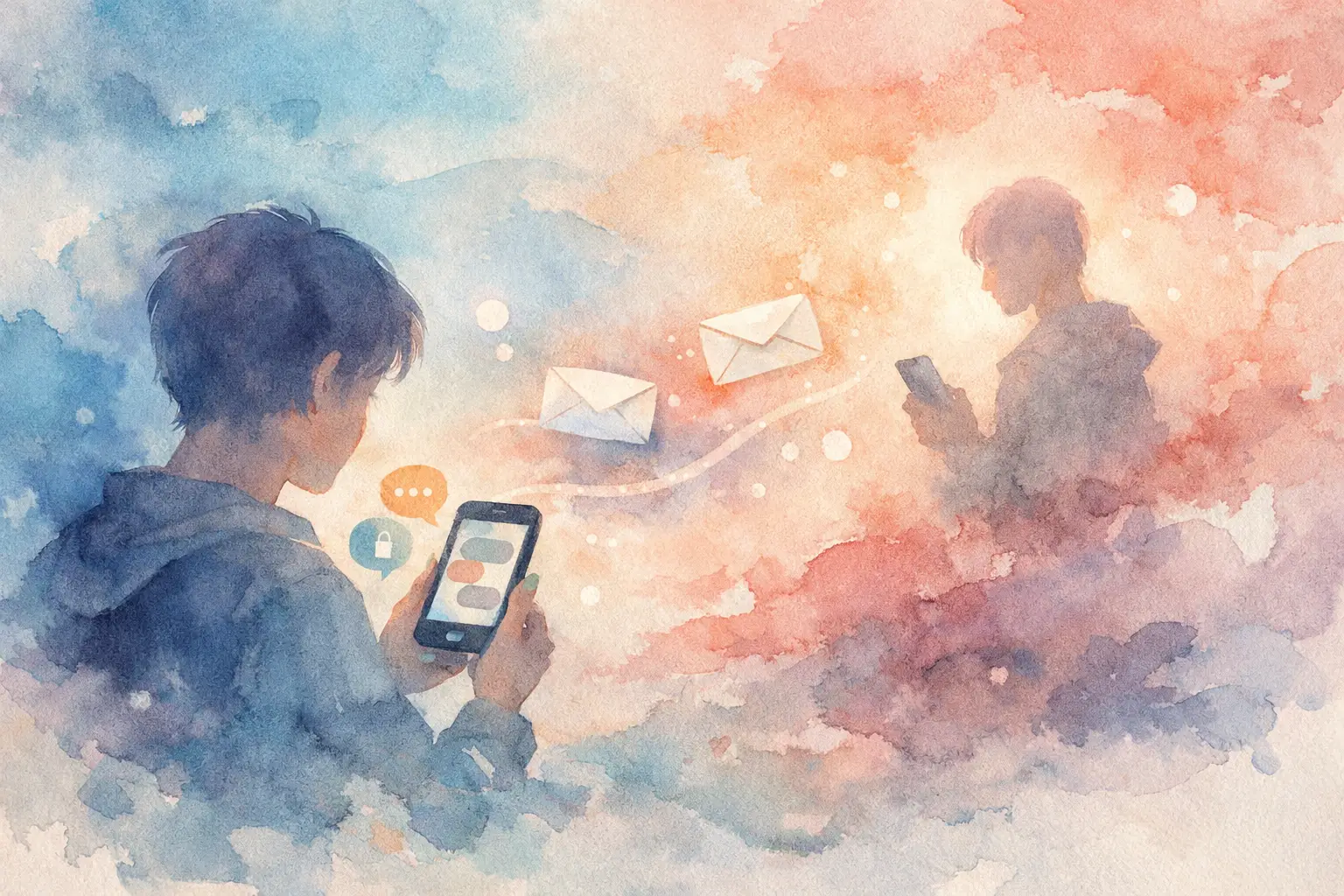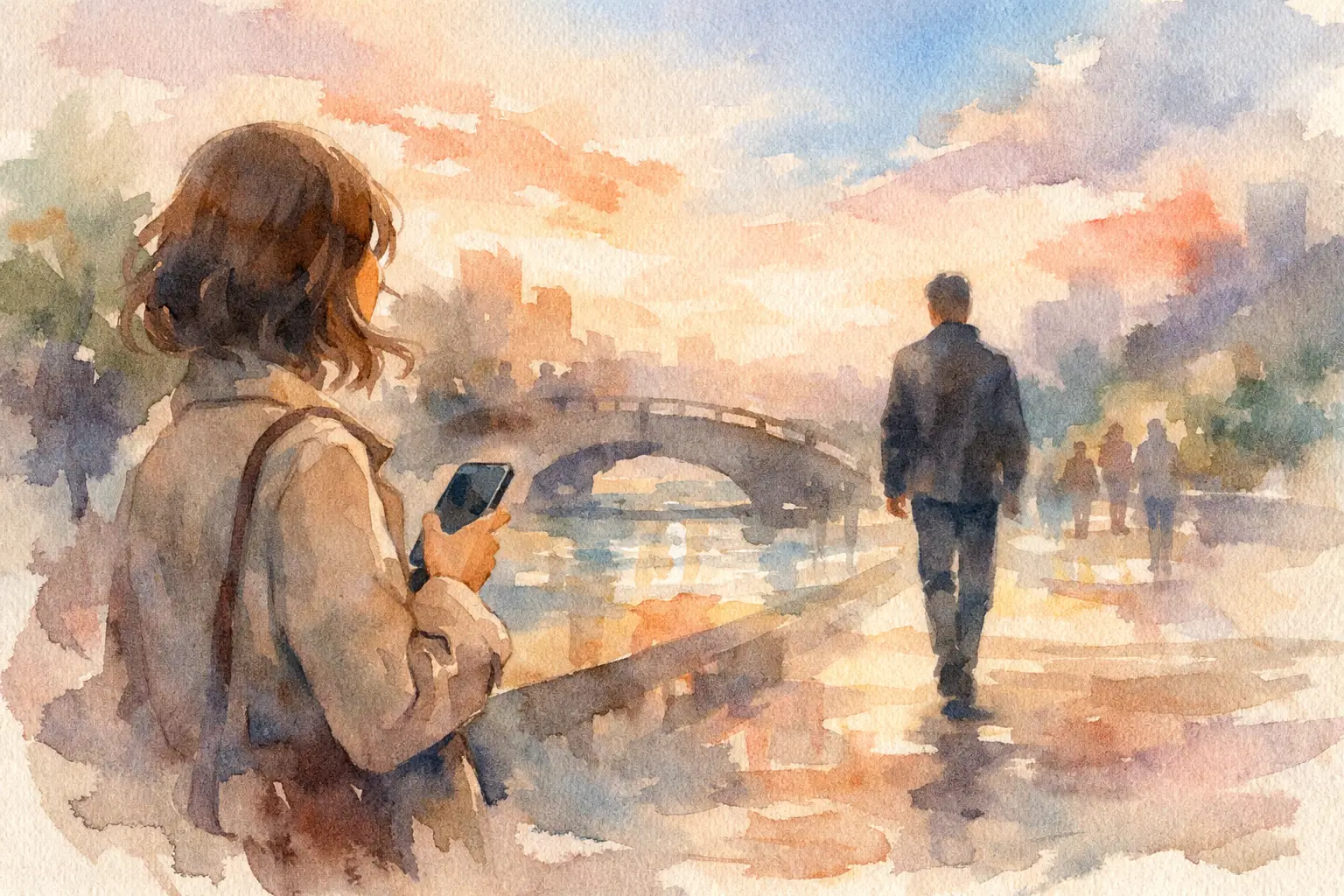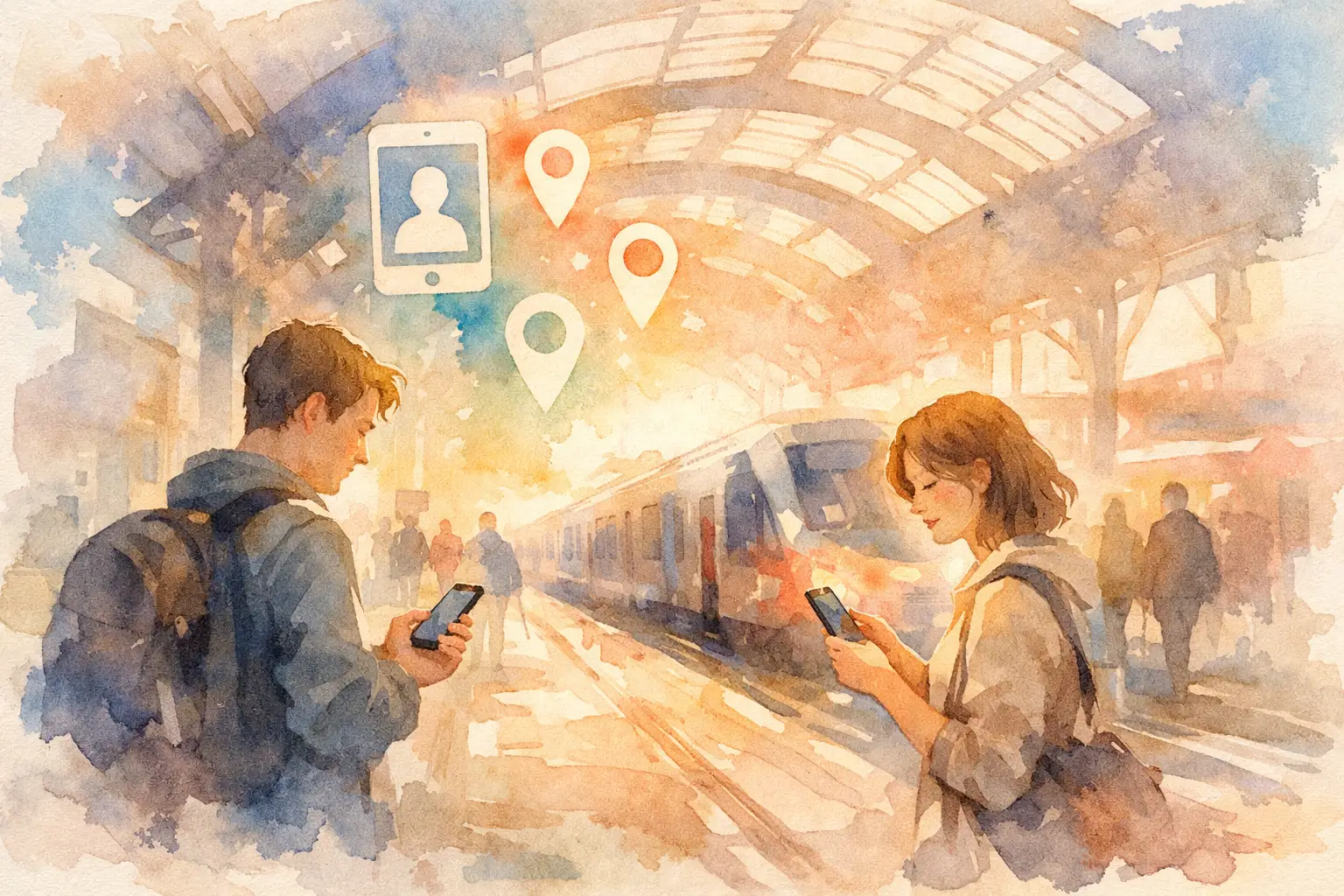
You step off the train, glance back once, and there they are – the person who made a crowded platform feel briefly electric. Then the doors close, the crowd shifts, and the moment is gone. A train station encounter app exists for exactly that kind of almost. Not to replace real life, but to give it one more chance.
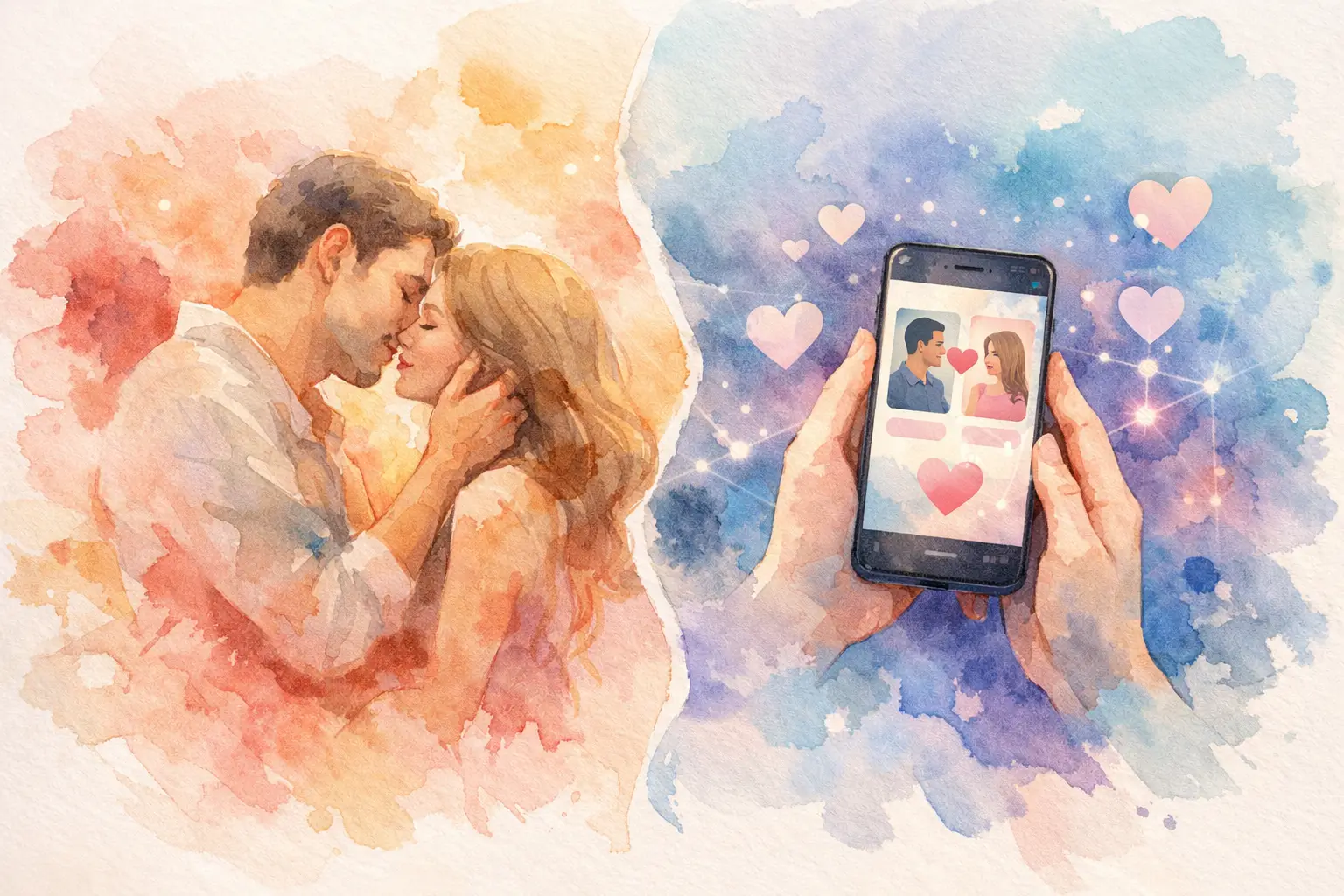
That difference matters. Most apps ask you to perform before you connect. Pick the right photos, write the right bio, learn the rhythm of the swipe. But a meaningful encounter at a station is already real. It happened in shared time, shared space, with all the tiny details no profile can fake – the delayed train, the eye contact, the half-smile, the way both of you hesitated and kept walking.
A good app for this kind of moment should respect what made it special in the first place. It should feel more like extending serendipity than entering a marketplace.
Why a train station encounter app feels different
Train stations are full of almost-stories. They create brief intimacy without invitation. Two strangers hear the same announcement, reach for the same railing, wait through the same delay, or sit across from each other while a city rushes past. It is public, ordinary, and strangely charged.
That is why a train station encounter app cannot simply borrow the logic of dating apps and call it innovation. A station encounter is not built around browsing strangers at scale. It is built around one specific moment. The app should start there – with time, place, context, and memory.
This makes the experience more romantic, but also more grounded. You are not saying, “Show me anyone nearby.” You are saying, “I shared something fleeting with someone at Grand Central around 6:40 p.m., and I want a respectful way to see if they felt it too.” That is a very different emotional contract.
What the best train station encounter app should actually offer
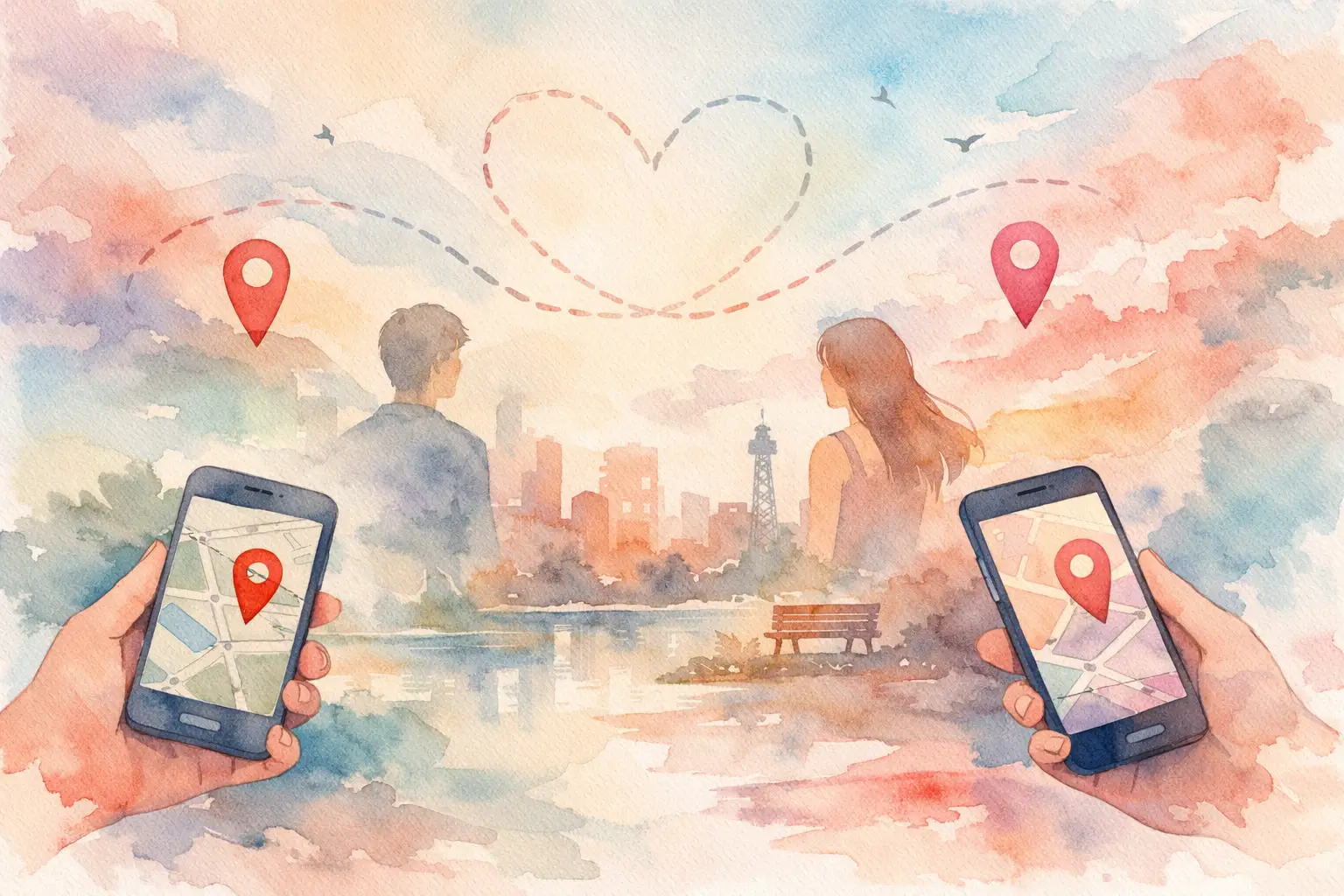
The first requirement is place-based posting. If the core use case is reconnecting after a missed moment in transit, users need to mark where it happened and roughly when. Without that, the whole thing becomes vague and noisy. The magic is in precision. Platform 9, downtown station, near the coffee stand, just before the express pulled in.
The second is privacy by design. Stations are busy, exposed places, and that means users need control. No public trail of their movements. No requirement to upload flattering photos just to participate. No open DMs from people who were never part of the original moment. If an app is built for meaningful encounters, then consent cannot be an afterthought.
The third is moderation. Romantic does not mean careless. A train station encounter app should review posts, filter unsafe or invasive content, and create clear boundaries around what is acceptable. There is a difference between, “We made eye contact on the uptown platform and I wished I had said hi,” and language that turns a stranger into a target. The best products know that line and protect it.
The fourth is emotional clarity. People use apps like this when they are acting on a feeling that is tender, impulsive, or unresolved. The interface should not exploit that. It should help users post clearly, wait patiently, and understand that not every moment becomes a match. Sometimes the value is simply knowing you gave fate a fair shot.
A missed train moment needs more than swipes
Swipe culture trained people to treat connection like inventory. More profiles, more speed, less meaning. That model works if your goal is volume. It fails if your goal is honoring a real moment that already happened.
A train station encounter app should not ask users to scroll through endless faces hoping to recognize someone from a commute. Memory rarely works that way. You remember the yellow scarf, the paperback, the nervous laugh when the train was delayed, the fact that you both looked up at the same announcement board. Context carries the memory, not a polished headshot.
This is where a place-and-moment model feels more human. Instead of turning chemistry into content, it lets users describe what happened and where. That shift does two things at once. It protects people from being reduced to appearance, and it gives genuine encounters a better chance to find each other.
For people tired of performative dating, that feels like air after a crowded car.
The trade-off: romance needs guardrails
There is a reason this category feels exciting, and there is also a reason it has to be handled carefully.
A location-based app can create beautiful second chances, but only if users trust it. That trust depends on boundaries. Time windows should be broad enough to protect exact movements. Communication should happen only when there is mutual interest. Reporting tools should be easy to find and taken seriously. Content review should be active, not symbolic.
There is also the emotional trade-off. Not every glance means the same thing to both people. Sometimes eye contact is just eye contact. A healthy app acknowledges that without draining the romance out of it. It can believe in chemistry and still protect people from pressure. In fact, that balance is what makes the whole idea credible.
The strongest products in this space understand that destiny works best with consent.
What users are really looking for on a train station encounter app
Sometimes it is romance, plain and simple. The person across the aisle. The stranger who helped with a suitcase. The one you smiled at through the closing doors and kept thinking about all day.
Sometimes it is softer than that. You want to reconnect with someone you used to know and happened to cross paths with in the city. Sometimes it is practical. You left a notebook, a tote bag, or a jacket at the station and need a community-based way to ask around. The most thoughtful apps leave room for those adjacent moments because real life does not separate emotion and utility as neatly as product categories do.
That is part of what makes this concept so compelling. It is not only about dating. It is about unfinished human moments.
One platform that leans into this idea is Once More, which frames missed encounters as something worth honoring rather than dismissing. That approach resonates because it understands a truth many city people already feel: technology should not replace chance chemistry. It should power up your serendipity when life moves too fast.
How the experience should feel from the first tap
If someone opens a train station encounter app right after a missed moment, they are usually in motion. They may be walking up stairs, boarding another line, or replaying the encounter before it fades. The app should meet that state of mind.
That means fast posting, simple prompts, and clear choices. Where did it happen? Around what time? What do you remember? What kind of reconnection are you hoping for? The flow should be gentle, not clinical. It should help users capture a moment before memory blurs, while also reminding them that respect comes first.
The response experience matters too. If there is a possible match, the app should create a calm, mutual path forward. No forced exposure. No instant access to personal details. Just a shared acknowledgment that two people may have felt the same spark in the same place.
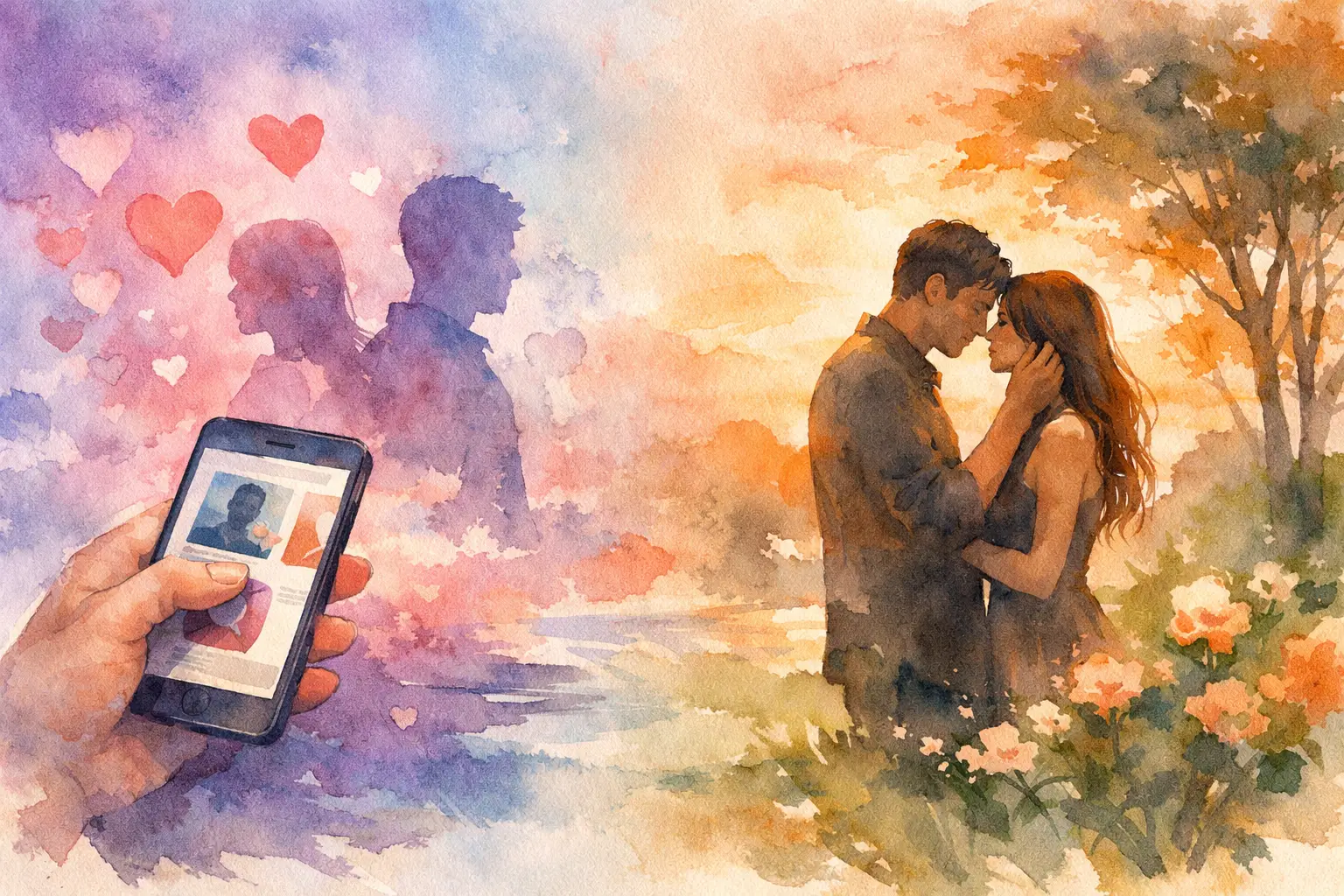
That is the second chance at magic users are really looking for – not chaos, not pressure, just one honest opening.
Why this kind of app belongs in city life
Cities are full of proximity and shortage at the same time. Millions of people, very little room for pause. You can stand shoulder to shoulder with someone for twenty minutes and never get another chance to speak. Urban life creates possibility, but it also interrupts it constantly.
A train station encounter app makes sense because it works with that rhythm instead of fighting it. It recognizes that many meaningful encounters happen between destinations, under time pressure, in imperfect circumstances. It does not ask people to schedule chemistry. It helps them return to it.
That is a powerful promise, but only when the app stays true to the moment that inspired it. Less performance. More place. Less spectacle. More consent. Less digital noise. More real-world feeling.
If you have ever looked back from a platform and wondered what might have happened if one of you had been braver, the right app should not make that moment feel silly. It should make it feel worth trying for – carefully, respectfully, and while the city is still humming around you.