Category: Uncategorized

  • Dating Without Profile Photos Actually Works

    Dating Without Profile Photos Actually Works

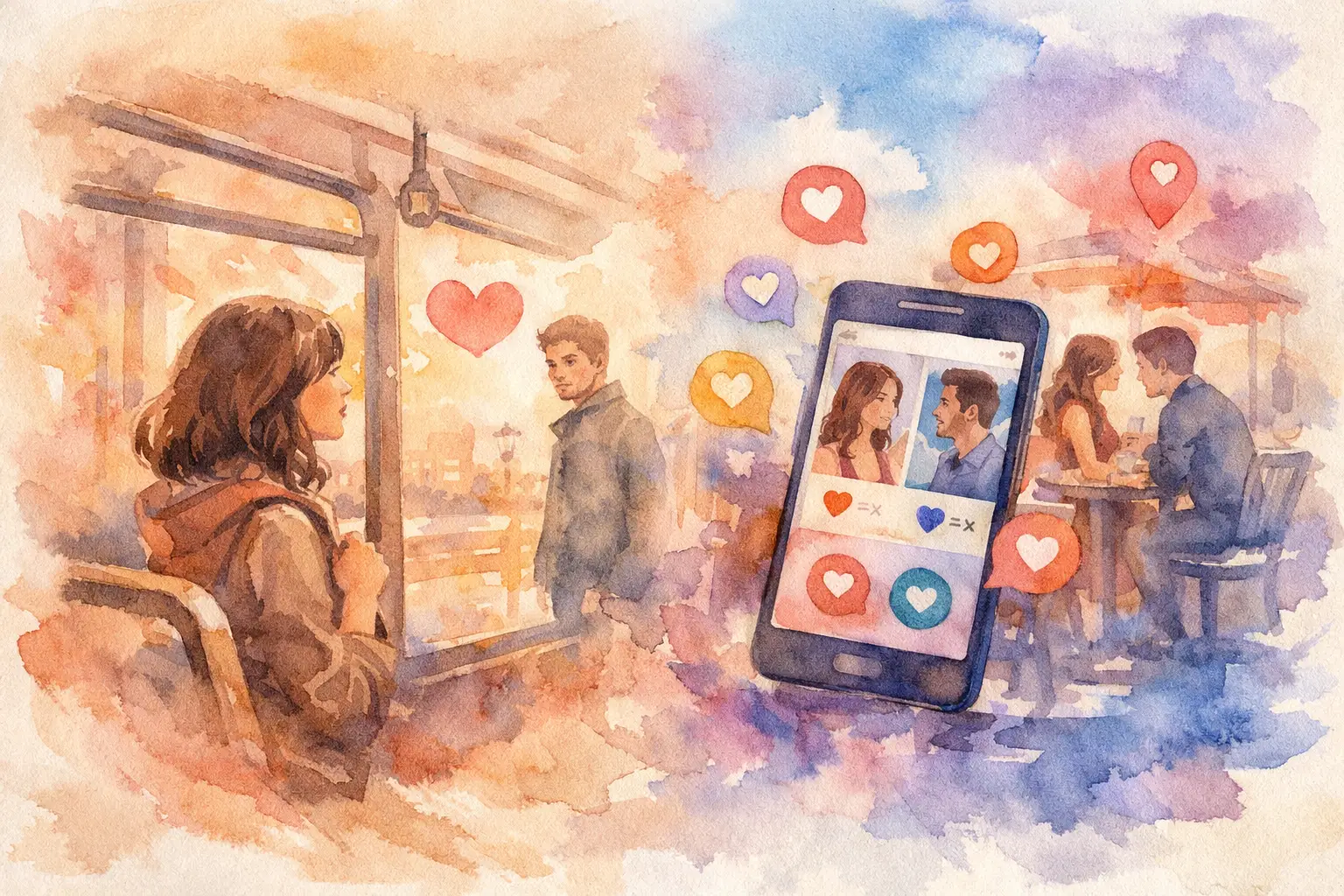
    You know that feeling when someone looks up from their book on the train, meets your eyes for half a second, and the whole commute changes temperature? Then the doors open, the moment passes, and all you’re left with is a very specific memory and no way to follow it. That’s why dating without profile photos feels so different. It starts with a real encounter, not a curated square on a screen.

    For a lot of people, that difference is the point. Traditional dating apps train us to judge first and wonder later. You scan faces, make fast assumptions, and swipe through human beings like you’re sorting tabs. It can be efficient, sure. It can also flatten attraction into a performance, where the best-lit photo wins and actual chemistry gets pushed to the side.

    Dating without profile photos asks a more interesting question: what if attraction begins before the profile does? What if the spark came from the way someone laughed in line at a coffee shop, the small act of kindness you noticed at a crosswalk, or the strange electricity of sharing the same tiny moment in a crowded city? In that version of connection, mystery is not a trick. It’s a return to attention.

    Why dating without profile photos feels more real

    When photos disappear, something else gets louder. Context. Memory. Presence. Instead of asking, “Are they photogenic?” you start asking, “What did I feel when I was near them?” That shift matters because attraction in real life is rarely built from one still image. It’s voice, timing, body language, energy, and the unplanned details no profile can fully capture.

    This is especially true for people who are tired of auditioning online. Profile photos often become a strange kind of labor. You choose the right angle, crop out the ex, try to look attractive but effortless, playful but not unserious, polished but not trying too hard. The whole thing can feel less like connection and more like brand management.

    Without that visual marketplace, people often feel less pressure to package themselves. The interaction becomes more intentional. You’re not trying to win the swipe of a stranger who knows nothing about your life. You’re trying to reconnect with someone whose path already crossed yours. That changes the emotional temperature immediately.

    The trade-off in dating without profile photos

    Let’s be honest – removing photos does not magically solve every problem in modern dating. It changes the rules, and for the right person, that feels like relief. For someone else, it might feel uncertain.

    Photos can offer a quick sense of familiarity and safety. Some users like knowing who they’re talking to upfront. Others rely on images because visual attraction is important to them, and there’s nothing shallow about admitting that. Physical attraction matters. So does comfort. Dating without profile photos is not better in every situation. It’s better when your goal is to protect privacy, slow the pace, and let a real-world moment lead.

    That distinction matters. If you want to browse a large pool and decide quickly, a photo-free experience may feel restrictive. If you’re more interested in the person you noticed at the bookstore, the one from the concert line, or the stranger who made your ordinary Tuesday feel charged, then the absence of photos can feel almost liberating.

    What replaces the profile picture

    If there’s no face to swipe on, what anchors the connection?

    Usually, it’s place and timing. The where and when become part of the story. That sounds simple, but it changes everything. A profile picture tells you what someone wants to show. A shared location tells you that you were both there, breathing the same air, living inside the same moment.

    That kind of context creates a different kind of trust. Not blind trust, and not instant intimacy, but recognition. You’re not speaking into a void. You’re reaching toward someone connected to a lived memory. Maybe it was a rooftop party, a delayed subway ride, a farmers market, a traffic light, a lecture hall, or the tiny neighborhood cafe where your hands almost touched grabbing the same sugar packet. Those details carry emotional weight that generic bios rarely can.

    For a platform like Once More, that’s the heart of the experience. It doesn’t try to replace real life with a digital catalog. It gives missed moments a second chance at magic while keeping privacy and consent at the center.

    Dating without profile photos and privacy

    One reason this model resonates now is simple: not everyone wants to put their face, name, habits, and dating intentions on display. The common design of dating apps asks users to be highly visible before they feel safe. That bargain works for some people. For others, especially in big cities or tightly connected communities, it can feel invasive.

    Dating without profile photos offers a more protected starting point. You don’t have to broadcast yourself to everyone in a radius. You can engage more selectively, often based on a specific encounter rather than endless exposure. That can be especially appealing if you value discretion, if you’re uneasy with strangers screenshotting your profile, or if you just don’t want your romantic life turned into public inventory.

    Of course, privacy should never come at the cost of accountability. The best photo-free experiences are the ones that pair mystery with clear boundaries: consent-based communication, moderated posts, and thoughtful guardrails around how people reconnect. Romance is lovely. Safety is non-negotiable.

    Who this style of dating is best for

    This approach tends to resonate with people who still believe chemistry can happen before a username does. People who are observant in public. People who replay little moments. People who have ever stepped off a train and thought, I should have said something.

    It also works well for anyone burned out on the performance loop of mainstream dating apps. If swiping makes you feel detached, disposable, or weirdly numb, a more grounded model can feel like oxygen. Instead of trying to be chosen among hundreds of polished strangers, you follow the thread of one encounter that already mattered.

    That said, it helps to be patient. Photo-free dating is not built for instant volume. It’s built for meaning. The pace is different because the premise is different. You are not shopping. You are noticing.

    How to make dating without profile photos work for you

    The key is to lead with specificity. If you’re trying to reconnect after a real-life encounter, details matter more than polish. Think about what actually made the moment memorable. Where were you? What stood out? What tiny human detail made you want another chance?

    A good post or message does not need to be dramatic. It needs to be recognizable. “You were at the corner table wearing a red scarf” is useful. “You smiled when the barista misspelled both our names” is even better. The goal is not to sound impressive. The goal is to help the right person feel seen, not exposed.

    It also helps to stay respectful in tone. There’s a difference between romantic and intrusive. The best reconnections feel light, clear, and consent-aware. You’re opening a door, not pushing through it.

    And if a reply never comes, let that be information. Serendipity is beautiful partly because it cannot be forced. A healthy platform for dating without profile photos should preserve that truth rather than turn it into pressure.

    Why this model may shape the future of connection

    There’s a quiet rebellion in choosing connection that starts offline. Not because technology is bad, but because it works better when it supports real life instead of replacing it. The exhaustion many people feel with swipe culture is not just about too many options. It’s about too little substance. Too many introductions with no memory attached. Too much visibility without enough meaning.

    Dating without profile photos points toward a different future, one where apps help us act on real-world chemistry instead of distracting us from it. That future feels more human because it asks us to trust our own experience again. Did the moment feel alive? Did you notice something true? Did your instincts wake up?

    Those are not old-fashioned questions. They may be exactly what modern dating needs.

    A missed glance at a stoplight, a conversation cut short at a party, a stranger from the bookstore you still think about three days later – these moments deserve more than becoming stories you tell yourself. Sometimes all you need is a respectful way to reach back toward them and see if fate was trying to get your attention twice.
  • Are Missed Connection Apps Safe to Use?

    Are Missed Connection Apps Safe to Use?

    You lock eyes with someone on the train, both of you smile, and then the doors slide shut. That tiny electric moment lingers all day. Missed connection apps exist for exactly this kind of second chance. But romance should not require guesswork about your safety, which is why the real question is not just are missed connection apps safe, but what makes one safe enough to trust.

    The honest answer is: sometimes. These apps can be safer than traditional social or dating platforms in some ways, and riskier in others. It depends on how the app handles privacy, how much personal information users can reveal, and whether the platform is designed around consent instead of exposure.

    Are missed connection apps safe by design?

    A missed connection app works differently from a swipe-based dating app. Instead of browsing a wall of faces and bios, you usually post about a real-world moment tied to a place and time. That changes the emotional texture of the experience. It can feel more human, more grounded, and less performative. It can also create specific privacy concerns because location is part of the story.

    A safer design starts by limiting how much identifying information is visible. If an app encourages users to post full names, workplace details, personal routines, or exact home locations, that is a problem. If it removes profile photos, avoids public follower-style exposure, and keeps messaging consent-based, that is a much better start.

    The strongest missed connection platforms understand something simple: serendipity feels magical, but safety has to be intentional. A good app gives people a second chance at magic without forcing them to trade away anonymity.

    What the real risks look like

    Most people hear “location-based app” and immediately think stalking. That risk is real, but it is not the only one.

    One common issue is over-sharing. A user may post enough detail that a stranger can identify them even without a name. If someone says they were the barista closing up alone at a specific coffee shop on Elm Street at 9:40 p.m. every Thursday, that is no longer a soft missed connection. That is a breadcrumb trail.

    Another risk is unwanted contact. Some platforms blur the line between a respectful attempt to reconnect and persistent pursuit. If there is no mutual opt-in, no moderation, and no easy block or report function, a romantic gesture can turn uncomfortable fast.

    There is also the risk of impersonation or fake posts. A missed connection app can attract people who are bored, deceptive, or simply fishing for attention. If the app does not review content or remove suspicious behavior, users end up doing all the trust-checking themselves.

    Then there is emotional safety, which gets overlooked. A platform built around fate and timing can feel beautiful, but it should never encourage users to push past someone else’s silence. No reply is an answer. The safest apps make that boundary clear.

    What makes a missed connection app safer

    Safety is not one feature. It is a pattern.

    The first green flag is limited public identity. If users do not need to upload face photos or build a highly visible public profile, there is less surface area for misuse. That matters because missed connection apps are not supposed to recreate the same marketplace energy as mainstream dating apps. They work best when the encounter, not the self-promotion, is at the center.

    The second green flag is controlled location sharing. A safer app lets users tag a general place and moment without revealing a live location or exact movement in real time. “Near Bryant Park yesterday afternoon” is very different from broadcasting where someone is standing right now.

    The third is consent-based communication. Ideally, one person can post or send a signal, but conversation only opens when the other person chooses to engage. That protects the shy, the curious, and the cautious all at once.

    Moderation matters too. Manual content review, identity checks where appropriate, abuse detection, and visible reporting tools are not glamorous features, but they are the architecture of trust. Without them, every romantic feature sits on shaky ground.

    A thoughtful platform should also make it easy to block, mute, or hide posts, and easy to delete your own activity. Safety should not be buried in settings like a secret exit.

    How users can protect themselves without killing the magic

    You do not have to become cynical to stay safe. You just need a few boundaries.

    Keep your post recognizable to the right person, but not legible to everyone else. Mention the moment, the vibe, the shared detail, not your personal identifiers. “You were reading a dog-eared paperback on the downtown 6 train and laughed when the conductor made that joke” is enough. “You get off at Astor Place every morning and wear your hospital badge” is too much.

    Hold back contact details until trust is earned. There is no prize for moving too fast. Keep early conversation inside the app if possible, and do not share your phone number, home address, workplace, or social handles right away.

    If you decide to meet, treat it like any first meeting with someone from the internet, even if the origin story feels sweeter. Pick a public place, tell a friend where you are going, and arrange your own transportation. Chemistry in real life is lovely. Safety in real life is lovelier.

    Pay attention to tone. If someone ignores boundaries, pushes for personal information, or tries to make you feel guilty for being careful, that is your answer. The right connection will respect the pace.

    Are missed connection apps safer than dating apps?

    In some ways, yes. In other ways, no.

    They can be safer than swipe apps because they often reduce the performance layer. Fewer public photos, fewer superficial judgments, and less endless browsing can mean less harassment and less objectification. There is something grounding about starting from an actual shared moment instead of a curated feed of strangers.

    But missed connection apps also involve context, and context can reveal more than a selfie ever could. A dating profile may tell you what someone wants you to see. A post tied to a place, time, habit, or routine can accidentally say more.

    So are missed connection apps safe compared with dating apps? They can be, if they are built with privacy in mind and used with restraint. They can be less safe if they romanticize pursuit while neglecting consent.

    The signs an app is not taking safety seriously

    You can usually feel when a platform is designed for attention instead of care. If posts are fully public with no filtering, if exact locations are exposed, if there is no visible moderation, or if reporting abuse feels impossible, step back.

    The same goes for apps that reward volume over quality. If users are pushed to post aggressively, message repeatedly, or cast a wide net, the experience shifts from meaningful encounter to open-season hunting. That is not romance. That is noise.

    A platform worth your trust should feel calm, deliberate, and clear about its rules. It should invite possibility without inviting chaos.

    Why privacy and romance have to work together

    The best missed connection apps understand a tender truth about city life. People want a second chance, not a surveillance tool. They want to honor a glance across the coffee shop, not expose their daily route to strangers.

    That is why privacy is not the enemy of connection. It is what makes connection feel safe enough to pursue. When an app removes the pressure to perform, limits what strangers can know, and requires mutual consent before anything deepens, it protects the very thing people came for: authentic chemistry.

    That is also why a privacy-first platform like Once More feels aligned with the moment. By centering real-world encounters instead of profile shopping, and pairing that with manual review and consent-based interaction, it offers a more intentional path than the usual swipe loop.

    If you are wondering whether to try a missed connection app, trust both your hope and your instincts. A good platform should let you power up your serendipity without asking you to ignore red flags. The right second chance should feel exciting, yes, but also steady, respectful, and fully in your control.

  • 7 Top Apps for Reconnecting With Strangers

    7 Top Apps for Reconnecting With Strangers

    You know the feeling. Someone looks up from the seat across the train, or smiles while reaching for the same oat milk at the coffee shop, and for one electric second the whole city feels smaller. Then the doors open, the light changes, the crowd moves, and the moment is gone. If you have ever searched for the top apps for reconnecting with strangers, you are probably not looking for more swipes. You are looking for a second chance.

    That is what makes this category different from dating apps, social networks, or old-school people search tools. Reconnection apps are built around a specific kind of hope: not browsing strangers online, but finding one person you already crossed paths with in real life. The best ones respect that chemistry happened offline first, then use technology to help you find your way back without turning the whole experience into a performance.

    What makes the top apps for reconnecting with strangers worth using

    Not every app that claims to help people connect is actually designed for missed encounters. Some are really dating apps with a new label. Others are local forums where posts get buried under noise. The strongest options tend to share a few traits.

    First, they are built around context. Time, place, and moment matter more here than polished profiles. If you are trying to reconnect with the person from the bookstore on Friday night, a geo-tagged post or location-based feature is far more useful than an endless feed of strangers who were never there.

    Second, they need boundaries. A good app should make room for serendipity without creating pressure or exposing too much personal information. Consent-based messaging, moderation, and privacy controls are not side features in this category. They are the foundation.

    Third, the app has to understand intent. Some people are chasing a romantic near-miss. Others want to find a former classmate, track down someone who helped them in a crisis, or recover a lost item. The best platforms make space for those motives without making everything feel like a pickup line.

    7 top apps for reconnecting with strangers

    1. Once More

    If your idea of connection starts in the real world, this is the clearest fit. Once More is designed around the missed-moment problem itself: you saw someone in public, did not exchange information, and want a respectful way to reconnect afterward. Instead of pushing profile photos and swipe behavior, it centers the place and time where something meaningful happened.

    That difference matters. It keeps the emotional logic intact. You are not trying to manufacture chemistry from a profile. You are following up on chemistry that already existed, even if it lasted only a few seconds on a platform, in a cafe, or at a stoplight.

    It also feels better aligned with people who are tired of performative dating culture. The privacy-first setup and consent-based communication make it less invasive, while manual review adds a layer of trust that many broad social apps simply do not offer. If your goal is to power up your serendipity rather than shop for attention, this kind of design makes sense.

    2. Craigslist Missed Connections

    This is the old ghost of the internet, and somehow it is still around. Craigslist Missed Connections remains one of the simplest ways to post about a stranger you encountered in public. There is no polished onboarding and no romantic branding. It is raw, local, and incredibly hit or miss.

    That is both its charm and its flaw. On one hand, people still browse it precisely because it feels direct and unfiltered. On the other, it lacks the safety, moderation depth, and modern user experience most people now expect. If you live in a major city, it can still be worth a shot, but it is better thought of as a public bulletin board than a purpose-built reconnection tool.

    3. Nextdoor

    Nextdoor is not a romance app, and that is exactly why it can work well for certain kinds of reconnection. If you are trying to find the person who returned your wallet, reconnect with someone from the dog park, or identify the kind stranger who helped when your groceries spilled in the parking lot, neighborhood-based platforms can be surprisingly effective.

    Its strength is proximity and community context. Its weakness is tone. A missed connection post can feel slightly out of place among local complaints, recommendations, and safety alerts. For practical or community-minded reconnections, though, it can be one of the more useful options.

    4. Facebook local groups

    This is less an app category than a behavior pattern, but it deserves a place on the list because people actually use it. City groups, neighborhood groups, college alumni groups, and event pages often become informal spaces for reconnecting after real-world encounters.

    The upside is scale. A lot of people are already there, and local groups can surface posts quickly when the timing is right. The downside is exposure. Facebook is not built around private, consent-first missed connections, so your post can feel more public than intimate. It works best when the connection was tied to a shared setting, like a concert, campus, market, or community event.

    5. Instagram location tags

    Instagram is a strange but common tool for this. People browse location tags for cafes, bars, galleries, and events hoping to spot the person they noticed offline. Sometimes they remember a detail, like a jacket, a table, or a mutual event, and piece it together from stories or posts.

    This can work, especially in image-heavy social scenes, but it comes with obvious trade-offs. It rewards visibility, not restraint. It also depends heavily on the other person posting publicly and tagging the place. If you want to reconnect after a fleeting moment and prefer a quieter, more intentional route, Instagram often feels too noisy for the tenderness of the task.

    6. Bumble BFF or Bumble Date

    This is not a true missed-encounter app, but some people use dating and friend-finding apps to search a neighborhood after a real-life moment. If you met eyes at the farmer’s market and suspect the person lives nearby, a geo-based mainstream app can occasionally help you cross paths digitally.

    Still, this is where intent gets muddy. Bumble is optimized for browsing available profiles, not rediscovering one specific stranger from one specific place and time. If you are open to broadening the search into general dating or friendship, it can be useful. If you are trying to preserve the magic of one encounter, it may feel too indirect.

    7. Reddit local communities

    City-based Reddit communities can function like a collective memory for urban life. People post about missed encounters, ask for help identifying someone from an event, or try to reconnect with a stranger after a notable moment. In the right subreddit, a post can get real traction fast.

    But Reddit is deeply dependent on the culture of the community. Some local groups are warm and helpful. Others are sarcastic and quick to mock anything sentimental. If you use it, write clearly, protect private details, and expect mixed reactions. It can absolutely work, but it does not always treat vulnerability gently.

    How to choose between these apps

    The right choice depends on what kind of reconnection you are hoping for. If this was a romantic missed moment, an app built specifically for place-and-time-based reconnection will usually give you the best shot while keeping the experience respectful. If the goal is practical, like finding someone who found your keys or reconnecting with a classmate, neighborhood and community platforms may be stronger.

    It also depends on your tolerance for visibility. Some tools, like Facebook groups or Reddit, can cast a wide net quickly, but they can make a tender moment feel public. Others are more private and intentional, but may have smaller user bases in certain cities. That trade-off is real. Reach matters, but so does the feeling of the space.

    A few signs an app is not the right fit

    If the experience begins with profile optimization instead of the real-world encounter, it is probably drifting away from your actual goal. If there is no moderation, no privacy guardrails, or no way to control who contacts you, that is another warning sign. Reconnection should feel hopeful, not exposed.

    There is also the question of timing. Some apps work best in dense cities with active local communities. Others are more dependable for major events than for everyday street-level moments. A beautiful concept is only useful if people nearby are actually using it.

    The real test of a reconnection app

    The best app in this category does not just help you post. It protects the feeling that made you post in the first place. It understands that a shy glance on a train is different from online flirting. It leaves room for fate, but does not abandon safety. It gives meaningful encounters a second chance at magic without asking you to turn yourself into content.

    Sometimes nothing comes of the post, and that is part of the honesty of this whole space. But sometimes the city answers back. Sometimes the person from the crosswalk, the cafe line, or the museum hallway was looking too. If that possibility still makes your heart lean forward, choose the app that honors the moment instead of flattening it.

  • Dating Apps vs Chance Encounters

    Dating Apps vs Chance Encounters

    You know the moment. Someone looks up from their book on the train, or smiles at you across a coffee shop line, or says one small thing that lingers long after the light turns green. Then the doors close, the crowd moves, the moment ends. That is where the real conversation around dating apps vs chance encounters begins – not in theory, but in the ache of almost.

    For a lot of city people, this is the split screen of modern romance. On one side, dating apps offer access, volume, and a way to meet people you would never cross paths with otherwise. On the other, chance encounters carry the electric charge dating apps often struggle to manufacture. One gives you options. The other gives you a story before the first message is even sent.

    Neither path is automatically better. But they are built on different ideas of connection, and that difference matters more than most people admit.

    Dating apps vs chance encounters: what are you really choosing?

    At first glance, the choice seems obvious. Dating apps are efficient. Chance encounters are unpredictable. If your goal is to meet someone, why not choose the system with more people, more filters, more activity, and more control?

    Because control is not the same thing as chemistry.

    Most dating apps begin before any real-world spark exists. You are asked to evaluate someone through photos, prompts, and a curated version of personality. Attraction can happen there, of course. Plenty of relationships begin that way. But the process trains people to assess and compare before they ever feel a live connection. It can turn romance into sorting.

    Chance encounters work in reverse. The first impression is not a headshot or a polished bio. It is presence. The way someone laughs with a friend. The quiet confidence in how they order coffee. The shared frustration of a delayed train. The feeling is often immediate, messy, and hard to explain. You notice them as a person before you package them as a profile.

    That difference changes the emotional texture of the whole experience. Dating apps ask, “Would I choose this person?” Chance encounters make you ask, “Why can’t I stop thinking about them?”

    Why chance encounters feel more magnetic

    There is a reason missed connections live in your head rent-free. Real-world encounters engage parts of attraction that apps cannot fully replicate. Timing, body language, voice, eye contact, energy – these details are not extra. They are often the thing itself.

    A profile can tell you someone likes live music, dogs, and spicy margaritas. It cannot tell you how they looked at the rain outside the window or whether your conversation felt easy in a room full of noise. It cannot recreate that strange certainty that sometimes arrives before logic does.

    This is where chance encounters feel almost unfairly powerful. They give you context. The person is not floating in the abstract. They are tied to a place, a moment, a version of you that was fully alive enough to notice them. That memory adds meaning before anything starts.

    Still, romance does not survive on mood alone. A beautiful moment means very little if there is no respectful way to reconnect.

    Where dating apps still win

    It would be easy to paint dating apps as cold and chance encounters as pure magic, but that misses the real trade-off. Dating apps solve practical problems. They make intention visible.

    On an app, people are usually there to meet someone. That removes a lot of ambiguity. You are not wondering whether the person at the bar is single, interested, or open to being approached. The social frame is already set. For many users, especially people tired of misreading signals in public, that clarity is a relief.

    Dating apps also expand your world. If your day moves between the same office, gym, and neighborhood spots, apps can introduce people outside your routine. They can be especially useful during life phases when spontaneous social interaction is limited or when someone wants to date with more specific compatibility criteria in mind.

    And yes, efficiency matters. Not every romantic life needs to feel cinematic. Some people would rather skip the longing and get to the conversation.

    The problem is what efficiency can cost. When every interaction begins in a marketplace of options, people can start acting like options. The result is often a strange mix of abundance and detachment. More access, less weight. More matches, less momentum.

    The hidden problem with swiping

    Swipe culture did not just make dating faster. It changed what people pay attention to.

    When connection starts with browsing, appearance and instant judgment become the front door. Even thoughtful users can get pulled into habits that feel more like shopping than meeting. Tiny details become dealbreakers. People perform versions of themselves designed to survive quick evaluation. The whole system rewards what can be seen fast.

    That does not mean everyone on dating apps is shallow. It means the design itself nudges behavior in that direction.

    Chance encounters interrupt that pattern. They begin with a lived moment, not a catalog. You are not comparing fifteen faces on your couch. You are remembering one person who made an ordinary day feel slightly altered. That makes the connection more specific and, often, more sincere.

    Still, sincerity alone is not enough. Modern romance also has to account for privacy, consent, and safety.

    Dating apps vs chance encounters in a privacy-first world

    This is where the old fantasy of missed connections used to fall apart. Real-life chemistry is powerful, but tracking down a stranger should never require crossing boundaries. No one wants romance to become surveillance.

    That is why the best alternative to traditional dating apps is not simply “talk to more strangers.” Sometimes the moment passes. Sometimes you freeze. Sometimes the setting is too public, too rushed, or too delicate to ask for a number. You should be allowed to honor the feeling without invading someone’s space.

    A place-based reconnection model offers something different. Instead of browsing profiles, users can post around a real-world moment and leave room for mutual recognition. No forced exposure. No public pressure. No need to know someone’s name, workplace, or social handles. Just a respectful way to say, “We shared something. If you felt it too, here is a second chance.”

    That is a very different energy from standard dating apps. It preserves the magic of the original encounter while protecting both people involved. And for urban romantics who believe timing matters, that balance feels rare.

    So which one leads to better relationships?

    The honest answer is that it depends on what kind of beginning you trust.

    Dating apps can lead to lasting love. They are useful, direct, and often genuinely effective. If you value scale, convenience, and clear dating intent, they may fit your life better. They are especially helpful when you want to widen your pool or date more proactively.

    Chance encounters, though, offer something dating apps cannot manufacture: proof that your connection already existed in the wild. Before the profile, before the text thread, before the algorithm, there was a moment. A real one. That can create a stronger emotional foundation because the attraction is rooted in lived experience rather than hypothetical compatibility.

    For many people, the sweetest spot is not choosing one and rejecting the other. It is refusing the idea that digital tools should replace real life. Technology works best when it supports human chemistry instead of trying to simulate it.

    That is the promise behind platforms like Once More. Not more swiping, more serendipity. Not more performance, more recognition. A way to power up your serendipity without stripping the moment of its mystery.

    What modern romantics actually want

    Most people are not asking for infinite choice. They are asking for a better feeling.

    They want to meet someone without turning themselves into content. They want the spark of real life with the practical help of technology. They want privacy, mutual consent, and a path that feels human. They want a second chance at magic, not another evening spent sorting strangers by thumbnail.

    That is why the debate around dating apps vs chance encounters matters. It is not just about where people meet. It is about what kind of love story feels believable now.

    The future probably does not belong to pure swiping or pure chance alone. It belongs to tools that respect what already happens between people in the real world – the glance, the pause, the almost, the moment you wish had lasted two minutes longer.

    If someone stayed with you after the train left or the streetlight changed, that feeling is worth taking seriously. Not every encounter is fate. But some moments deserve more than disappearing.

  • Location Based Social App vs Swipe Dating

    Location Based Social App vs Swipe Dating

    You lock eyes with someone on the train. They smile, the doors open, and that tiny spark disappears into the crowd before either of you says a word. That is where location based social app vs swipe dating becomes more than a tech comparison. It becomes a question of what kind of connection you actually want – one built from a real moment, or one built from a stack of profiles.

    Swipe dating was designed for speed. It gives you faces, short bios, and a fast yes-or-no rhythm that can feel thrilling for five minutes and strangely empty after fifty. A location-based social app starts somewhere else entirely. It begins with a real encounter in a real place, then gives that moment a second chance.

    What location based social app vs swipe dating really means

    At a glance, both models help people meet. But they are powered by very different instincts.

    Swipe dating asks you to shop before you connect. You browse strangers who may be nearby, attractive, interesting, or completely wrong for you in person. The first filter is usually visual, the second is performative, and the third is often timing. Did they post the right photos? Did they write a clever enough line? Did you both happen to be online and available at the same moment?

    A location-based social app flips that sequence. The first filter is lived experience. You already saw the person, shared the same air, noticed something unedited, and felt whatever you felt without a profile telling you how to interpret it. The app is not replacing chemistry. It is extending it.

    That difference sounds subtle until you live with it. One model starts with curation and hopes for chemistry later. The other starts with chemistry and creates a respectful path to reconnect.

    Swipe dating is efficient, but efficiency changes behavior

    There is a reason swipe dating took over. It is easy, familiar, and always available. If you are new in a city, short on time, or simply want the widest possible pool, swiping can feel practical. There is no need for a missed glance, a shared coffee line, or a bold move in public. You can browse from your couch.

    But convenience shapes culture. When connection begins with endless browsing, people start optimizing for attention. Photos become strategy. Bios become mini ads. Conversations often begin before there is any real emotional gravity behind them.

    For many users, especially in big cities, that creates fatigue. You can have lots of matches and very little momentum. You can spend hours choosing and still feel like no one really sees you. The app gives you volume, but volume is not the same thing as meaning.

    This is the hidden trade-off in swipe dating. It lowers the barrier to meeting, but it can also lower the felt significance of each person. When everyone is part of an infinite deck, no one feels rare for long.

    A location-based social app protects the magic of the moment

    A location-based social app appeals to a different kind of person: someone who still believes a real encounter matters. Maybe it was the woman reading beside you in a cafe. Maybe it was the guy who helped you with your suitcase at the station. Maybe it was someone from years ago, someone from school, someone whose name you lost but never quite forgot.

    In those moments, attraction is not hypothetical. It already happened. What you need is not a better profile. You need a safe, consent-based way to say, “We crossed paths. If you felt it too, I am here.”

    That is what makes this model feel so human. It leaves room for timing, chance, and the strange electricity of being in the same place at the same time. It gives people a second chance at magic without demanding that they perform for strangers first.

    And just as importantly, it can do that while respecting boundaries. A thoughtful location-based platform does not expose personal details, force contact, or reward aggressive behavior. It creates a structured way to reconnect only when interest is mutual.

    The biggest difference is not dating. It is intention.

    This is where the conversation gets interesting. Swipe apps are often treated as dating tools, but many people use them for validation, entertainment, boredom relief, or passive curiosity. There is nothing inherently wrong with that. It just means not every match is rooted in real intention.

    A location-based social app tends to narrow the field in a healthier way. The person you are trying to find is not one of hundreds. They are someone specific. The memory is anchored to a place, a moment, a glance, a conversation, a feeling.

    That naturally makes the experience more intentional. You are not swiping because you are vaguely open to attention. You are posting because someone genuinely stayed with you.

    For urban adults tired of performative digital dating, that difference can feel almost radical. It brings the focus back to presence. Who caught your eye when no algorithm was nudging you? Who felt familiar before you knew anything about them? Who would you have talked to if life had given you thirty more seconds?

    Privacy changes everything

    A lot of dating platforms talk about connection, but the user experience often feels like exposure. Public-facing photos, searchable profiles, and loose messaging norms can create pressure to be visible before you feel safe. For some people, that is merely annoying. For others, it is the reason they leave.

    A privacy-first location-based social app offers a different emotional contract. It can remove profile performance from the equation and put consent at the center. That matters because missed connections are tender by nature. They should be handled with care, not gamified into spectacle.

    This is one of the clearest advantages over swipe dating. If the goal is to honor a real-world moment, then the product should protect the people inside that moment. Manual review, controlled posting, and thoughtful communication design are not boring backend details. They are what make serendipity feel safe enough to act on.

    Who should choose which?

    If you enjoy meeting a wide range of people, are comfortable sorting through a lot of noise, and do not mind the visual-first culture of online dating, swipe apps may still fit your life. They are broad, familiar, and efficient for casual discovery.

    If you crave something more grounded, a location-based social app may feel closer to how your heart already works. It is better for people who trust real-life chemistry more than profile polish. It is especially compelling if you live in a dense city, spend time in transit, cafes, neighborhoods, and events, and know the ache of almost meeting someone.

    It is also more versatile than many people assume. The same structure that helps you reconnect with a stranger from a bookstore can also help with old classmates, local community moments, or practical posts like lost items. That makes the platform feel less like a dating machine and more like a social layer for real life.

    Why this shift matters now

    People are not giving up on connection. They are giving up on feeling processed by apps. That is why the conversation around location based social app vs swipe dating is growing. Users want technology that supports human instinct, not technology that trains them to ignore it.

    There is something quietly hopeful about a model built around places and moments instead of endless profiles. It says your life is already full of meaningful encounters. It says the street, the station, the coffee shop, the concert line – these are not dead zones between digital interactions. They are where life actually happens.

    That is the promise behind a platform like Once More. Not more noise. Not more browsing. Just a respectful way to power up your serendipity when a real moment deserves another chance.

    The best app for connection is not always the one with the most profiles. Sometimes it is the one that knows a glance can matter, timing can fail, and a second chance can still be enough.

  • How to Post a Missed Connection Safely

    How to Post a Missed Connection Safely

    You saw each other for three subway stops. Maybe there was a smile, maybe a tiny shared joke over a delayed train, maybe just that unmistakable feeling that something real had passed between two strangers before the doors opened and the moment disappeared. If you are wondering how to post a missed connection safely, the answer is not to say everything you know. It is to say just enough to make recognition possible, while protecting both your privacy and theirs.

    That balance matters. A missed connection should feel like a second chance at magic, not a public investigation. The safest posts leave room for consent, mystery, and dignity. They help the right person recognize the moment without exposing anyone to unwanted attention, embarrassment, or risk.

    Why safety matters in a missed connection

    A good missed connection post is built on real-world chemistry. But real-world moments also come with real-world boundaries. If someone shared eye contact with you in a coffee shop, that does not mean they agreed to have their face, workplace, route home, or personal details described online.

    This is where people get it wrong. In the rush to be found, they overshare. They mention exact train cars, company names, physical details that feel too intimate, or the precise time someone walks home. That can turn a hopeful post into something invasive very quickly.

    Posting safely is also about protecting yourself. The more identifying information you reveal about where you were, what you were wearing, or what your routine looks like, the easier it becomes for strangers other than the intended person to track you. A missed connection should open a door, not hand out a map.

    How to post a missed connection safely without losing the spark

    The safest approach is simple: be specific about the shared moment, but general about personal identity. That means focusing on the encounter itself rather than publishing a detailed profile of the other person.

    Think about what would help them recognize the interaction. The setting matters. The emotional beat matters. A small detail from the moment matters. What usually does not need to be included is a full physical description, a workplace, a school, a license plate, or anything that points too directly to where someone can be found offline.

    A safe missed connection sounds like a memory. An unsafe one sounds like surveillance.

    For example, saying, “We laughed when the barista spelled both our names wrong at a cafe in SoHo on Saturday morning” gives the right person a fair chance to recognize the moment. Saying, “You were the brunette in a green coat who works at the bookstore on Prince Street and left at 11:12” gives far too much away.

    That distinction is the whole game.

    Start with the moment, not the body

    If you want your post to feel romantic rather than intrusive, center the human interaction. Mention the missed timing, the shared look, the conversation that got cut short, or the oddly perfect coincidence. Those are the details that carry emotional truth.

    Physical descriptions should be minimal, if included at all. It is one thing to say “you had a bright yellow scarf” if the scarf was memorable and non-sensitive. It is another to catalog someone in a way that would make them feel watched. If a detail would sound unsettling if they read it out loud to a friend, leave it out.

    Keep time and place broad enough to protect privacy

    You do want to anchor the post in a real encounter. But there is a difference between useful context and pinpointing someone. A neighborhood, venue type, or general time window is usually enough. Think “Lower East Side coffee shop on Sunday afternoon,” not “corner table by the back window at 3:17 p.m.”

    This matters even more if the place is tied to someone’s routine, like their gym, office, school, or commute. The more often they return there, the more careful you should be. A post should never create the feeling that someone has been tracked through their daily life.

    Leave room for consent

    The safest missed connection is one that invites, not pressures. Your wording should make it easy for the other person to ignore the post if they are not interested. That is not a failure of romance. That is respect.

    A good tone is open, warm, and low-pressure. Something like, “If this sounds like our moment and you would like to say hi, I would love that” works well. It signals interest without entitlement.

    What does not work is language that assumes access. Avoid anything that sounds demanding, resentful, or emotionally loaded. If your post carries the energy of “I know where you were and you owe me a reply,” the spark is gone.

    What not to include in a missed connection post

    Some details are simply not worth the risk, even if they might increase the odds of recognition. Full names are out. Social media handles are out. License plates, employer names, apartment buildings, school programs, and anything involving children should be completely off-limits.

    The same goes for private or vulnerable situations. If the encounter happened near a hospital, during a difficult moment, or in a context where being publicly identified could cause harm or embarrassment, err on the side of not posting at all. Not every moment is meant to be chased.

    Photos should also be treated carefully. If the platform allows them, remember that posting someone’s image without their consent can feel far more invasive than a text description. For a privacy-first experience, less is often more. Some of the most intentional reconnection spaces avoid profile photos entirely for exactly this reason. They let the moment lead.

    Writing a post that feels safe and sincere

    A missed connection should sound like a person reaching out, not an ad or a detective report. The best posts are brief, grounded, and emotionally honest.

    Start with where the moment happened in broad terms. Add one or two details that only the other person is likely to recognize. Then say why you are posting, in plain language. Maybe you regret not saying hello. Maybe you did speak, but ran out of time. Maybe it was a tiny exchange that stayed with you all day.

    The final note should be gentle. Invite a response if they feel comfortable. That phrase matters. Comfortable is the whole point.

    Here is the spirit to aim for: “We shared a smile waiting for the crosswalk in Williamsburg Friday evening after the rain. You made a joke about everyone forgetting how umbrellas work. I meant to keep talking, but the light changed and we went different ways. If this was you and you feel like reconnecting, I would be happy to hear from you.”

    It is vivid. It is recognizable. And it does not expose either person more than necessary.

    Platform choice changes the safety equation

    Where you post matters almost as much as what you say. Public forums can spread quickly, which sounds exciting until the wrong audience gets involved. Open comment sections, reposts, and searchable archives can turn a small romantic gesture into unwanted visibility.

    That is why consent-based, moderated spaces are a much better fit for missed connections than broad social feeds. A place designed around location, timing, and privacy gives the moment structure. It also reduces the chance that your post becomes entertainment for everyone except the person you hoped to reach.

    If you use an app built for reconnection, look for signals that it takes safety seriously. Manual review, limited personal data, controlled messaging, and privacy-first design all matter. Once More, for example, frames reconnection as an extension of real life rather than a performance for the internet. That difference is not just aesthetic. It is protective.

    It depends on the moment

    Not every missed connection should become a post. If the encounter was clearly one-sided, if the other person seemed uncomfortable, or if the setting made any follow-up feel inappropriate, let the moment stay beautiful and unfinished.

    There is a quiet kind of maturity in knowing when not to pursue the second chance. Romance is not just boldness. It is also reading the room, honoring boundaries, and accepting that chemistry only counts when it is mutual.

    When the moment does feel right, though, posting thoughtfully can be a lovely act of hope. You are not trying to force fate. You are simply leaving a light on.

    A simple rule for posting safely

    Before you publish, imagine the person reading your post with a friend. Would they smile and say, “Wait, I think this is me”? Or would they tense up and wonder how much you noticed? That reaction is your answer.

    The safest missed connection is one that protects the mystery while offering a path back to each other. Say enough to be found. Not enough to corner. That is how you keep the romance alive and the boundaries intact.

    Some encounters are meant to fade. Some deserve one respectful, well-placed second chance. If you choose to post, make it feel like an invitation fate would be proud of.

  • 7 Best Apps for Missed Connections

    7 Best Apps for Missed Connections

    You know the feeling. The train doors close, the coffee order is called, the crosswalk changes, and someone who felt oddly important is suddenly gone. That tiny ache is exactly why people search for the best apps for missed connections – not because they want more screen time, but because they want one more shot at a real moment that ended too fast.

    Not every app handles that feeling well. Some turn it into another swipe game. Some are better for broad local discovery than true reconnecting. And some actually respect what made the moment special in the first place: you were there, they were there, and something real happened in the same physical world.

    This guide looks at the best options with a simple standard in mind. If an app claims it can help with missed connections, it should make it easier to reconnect after a specific place-and-time encounter, protect privacy, and avoid turning strangers into public bait. That narrows the field quickly.

    What makes the best apps for missed connections actually work

    A missed connection app lives or dies on context. If all it offers is proximity and a pile of profiles, it is not really helping you find the person from the bookstore line or the stranger from the downtown platform. It is just giving you more people nearby.

    The strongest apps usually do three things well. They anchor a post or interaction to a real place and moment, they make consent part of the process, and they keep the tone intentional rather than performative. That last part matters more than people admit. When a platform is built for showing off, the original encounter gets buried under self-marketing.

    There is also a trade-off. The more precise the app gets about time and location, the more carefully it needs to handle privacy. The more open the community is, the more moderation matters. So the best choice depends on whether you care most about romance, local reach, discretion, or the odds of someone actually seeing your post.

    1. Once More

    If your idea of connection starts in real life, this is the clearest fit. Once More is built around the exact problem most people mean when they talk about missed connections: you saw someone in the wild, felt the spark, and never got the chance to exchange details.

    Its biggest strength is focus. Instead of pushing users into the usual profile-photo theater, it centers the place, the moment, and the memory. That changes the energy immediately. You are not browsing strangers for entertainment. You are trying to find one meaningful person tied to one meaningful encounter.

    That approach feels especially right for city life, where chemistry often happens in motion – on sidewalks, trains, cafes, galleries, and crowded corners where timing can ruin everything. By letting users geo-tag a moment and reconnect through consent-based communication, the app gives serendipity some structure without flattening it.

    There is a practical side too. Privacy-first interaction and manual review help reduce the chaos that usually comes with public stranger-finding. It can also stretch beyond romance into reconnecting with old classmates or posting about lost items, which makes the platform feel more human and less single-purpose.

    The trade-off is simple: a more intentional app may feel narrower than a giant dating platform. But that is also why it works.

    2. Craigslist Missed Connections

    This is the old legend in the category. For years, Craigslist was where people posted about the woman in the red coat on the F train or the guy at the record store who smiled and vanished. It still carries that cultural weight.

    Its appeal is obvious. People know what “missed connections” means there, and the format is direct. You describe the moment, hope the right person recognizes it, and wait.

    But it comes with limits. It is not app-first in the way modern users expect, and the experience can feel dated, uncurated, and uneven depending on your city. Moderation and trust can also be concerns. If you are comfortable with a more open bulletin-board style, it can still be worth trying. Just do not expect polished safety features or a privacy-centered design.

    3. Happn

    Happn is often mentioned in conversations about missed connections because it tracks people you have crossed paths with. That sounds perfect on paper, and in busy neighborhoods it can be genuinely useful.

    Where Happn works well is scale. If you live in a major city and move through high-traffic areas, your chances of seeing someone from your daily orbit are higher than on a niche app. It lowers the odds that a real-world crossing disappears forever.

    Still, Happn is only partly a missed connection app. It leans closer to dating, with profile browsing and a familiar app logic that can pull attention away from the one person you actually hoped to find. It is less about memorializing a specific encounter and more about surfacing nearby people. For some users that is enough. For others, it dilutes the magic.

    4. Bumble

    Bumble is not built for missed connections, but it is sometimes used that way, especially in dense cities where location filters help narrow the field. If you remember rough details about someone and suspect they are active on dating apps, there is always a chance you will find them there.

    Its strengths are mainstream adoption and a cleaner user experience than many alternatives. Safety tools are more developed than on older classified-style platforms, and a large user base improves the odds in some areas.

    The downside is obvious. You are searching inside a traditional dating environment, which means profiles, photos, and broad matching mechanics take center stage. If your goal is to reconnect based on a fleeting shared moment rather than shop through local singles, Bumble may feel like the wrong emotional language for the job.

    5. Tinder

    Tinder has the same basic limitation as Bumble, just with even more emphasis on speed and visuals. It can help only because it is huge. In some cities, sheer volume makes it a fallback option when you think, maybe they are on here.

    That scale is its advantage and its flaw. More people means better odds, but also more noise. The original missed connection can quickly disappear inside endless swiping, and that changes your mindset from recognition to consumption. If what you want is a second chance at one real encounter, Tinder can feel strangely far from the thing you are trying to recover.

    6. Instagram and TikTok local posting

    This is less an app category and more a behavior pattern. People post missed connection stories to neighborhood Instagram accounts, TikTok videos, or city-focused community pages hoping the internet does its thing.

    Sometimes it works fast, especially if the story is specific, harmless, and easy to share. Social reach can outperform smaller platforms overnight.

    Still, this route is messy. Privacy is shakier, comment sections can get weird, and a story meant to feel intimate can turn into entertainment for strangers. If you go this route, keep details respectful and avoid anything that would make the other person feel exposed rather than welcomed.

    7. Local community apps and neighborhood boards

    Apps built around neighborhoods or community groups can occasionally help with missed connections, especially when the encounter happened in a recurring local setting like a dog park, farmers market, or apartment area. They are also useful if your goal is broader reconnection, such as finding an old school friend or recovering a lost item.

    What they offer is familiarity. People in local communities often want to help, and posts tied to a shared place can travel quickly.

    But these are secondary tools, not purpose-built solutions. The audience may not be there for romance, and the tone can feel more civic than personal. Good for practical reconnection, less ideal for delicate chemistry.

    How to choose between these apps

    If your heart is set on one exact person from one exact moment, choose a platform designed around place, timing, and consent. That is the purest version of a missed connection tool.

    If you mainly want to increase your chances of seeing someone you crossed paths with in a busy city, proximity-based dating apps may help, though they bring more distraction. If you care most about reach and virality, social platforms can spread the story fast, but they also expose it to the wrong kind of attention.

    A good test is this: does the app preserve the dignity of the moment? If yes, you are probably in the right place. If it turns your memory into content or pushes you into endless browsing, it may be solving a different problem.

    A few smart rules before you post

    Keep your description specific enough for recognition but not so detailed that it feels invasive. Mention the place, the time, and the small detail that only the right person would know. Leave out private information, avoid posting photos without permission, and let the other person choose whether to respond.

    That balance matters. The best missed connection stories feel like an open door, not a spotlight.

    Some moments are supposed to pass. Others ask for one more try. If there is a person you cannot quite forget, the right app will not manufacture chemistry for you – it will simply give fate a fairer chance.

  • Did you see the 2013 movie “Missed Connections”?

    Did you see the 2013 movie “Missed Connections”?

    Director: Martin Snyder

    Starring: Mickey Sumner, Jon Abrahams, Malcolm Barrett, Waris Ahluwalia, Julia Jones

    Genre: Indie Romantic Comedy

    Built around the premise of the famous (and somewhat infamous) Craigslist personal ads, the film is a lighthearted, slightly mischievous take on how technology both helps and hinders modern romance.

    The Plot: Love in the Age of I.T.

    The story follows Lucy (Mickey Sumner), an up-and-coming New York lawyer who is tired of the city’s dismal dating scene and “the soft bigotry of lowered expectations” when it comes to men. With only a few days left before she transfers to her firm’s London office, she quite literally bumps into a sophisticated, handsome stranger (Jamie Belman). The spark is immediate, but no names or numbers are exchanged. Encouraged by her best friend (Julia Jones), an ad is placed on a “Missed Connections” website in hopes of tracking him down.

    Enter Josh (Jon Abrahams), a cocky, borderline-sleazy IT guy who works a few floors down at Lucy’s firm. Josh and his fellow techies—played to comedic perfection by Malcolm Barrett and Waris Ahluwalia—routinely spy on the female employees’ web activity and emails. When Josh intercepts Lucy’s “Missed Connection” post, he decides to game the system. Rather than let her find her Prince Charming, Josh orchestrates an elaborate, highly questionable scheme to steer Lucy into his own arms before she leaves for London.

    The Highs: Charm and Chemistry

    • Mickey Sumner Shines: In her feature debut, Sumner (daughter of rock legend Sting) carries the film with effortless grace. Her portrayal of Lucy is grounded, smart, and deeply relatable. She elevates the material, ensuring Lucy never feels like a one-dimensional rom-com trope.
    • The Supporting Cast: The IT trio is the comedic heartbeat of the film. Malcolm Barrett and Waris Ahluwalia inject a lot of much-needed levity and “bro-banter” into the narrative, acting as the mischievous Greek chorus to Josh’s misguided romantic plotting.
    • A Unique Premise: The movie successfully captures the “Girl Meets Boy” formula but updates it with a distinctly 2013 cyber-twist. It’s an interesting look at the early days of online romantic serendipity before swipe-based apps like Tinder completely took over the landscape.

    The Lows: A Questionable Foundation

    While the movie is undeniably fun, its central conceit hasn’t aged perfectly. The premise relies entirely on Josh invading Lucy’s privacy, reading her emails, and deceiving her to win her affection. While Jon Abrahams plays Josh with enough goofy charm to keep him from entering full-blown villain territory, the “stalker-lite” ethics of his master plan can feel a bit jarring. The script asks the audience to suspend their disbelief and forgive a lot of digital red flags in the name of romantic comedy.

    The Verdict

    Missed Connections is a breezy, fast-paced indie flick that feels perfectly tailored for a cozy Valentine’s Day watch. It doesn’t attempt to reinvent the wheel, but it leans heavily on the charisma of its cast and a sharp, witty script to keep things moving. While the male protagonist’s methods are ethically dubious by today’s standards, the film remains a fun, nostalgic time capsule of corporate crushes, internet anonymity, and the chaotic lengths people will go to in order to find “the one.”

    Rating: ★★★☆☆ (3/5 Stars)

    A charming, slightly flawed indie comedy that proves love isn’t always about luck—sometimes, it’s about strategy.


    Now, keep an eye for a movie on … once-more !… ❤\(^o^)/♡

  • Can You Find Someone You Saw in Public?

    Can You Find Someone You Saw in Public?

    You looked up, they looked back, and then the train doors closed. Or the barista called your name, the moment broke, and suddenly the person who felt oddly familiar was gone. If you have ever wondered, can you find someone you saw in public, the honest answer is yes – sometimes. But the better answer is that how you try matters just as much as whether you succeed.

    A missed connection sits in a strange little space between fantasy and reality. It was real enough to stay with you, but incomplete enough to leave room for imagination. That is exactly why people so often handle these moments badly. They search too broadly, post too much detail, or cross lines that turn a sweet memory into something invasive. The goal is not to chase someone down. The goal is to create a respectful second chance at magic.

    Can You Find Someone You Saw in Public Without Crossing a Line?

    Yes, but only if your approach leaves room for consent, privacy, and the possibility that the other person may not want to reconnect. That distinction matters.

    There is a big difference between saying, “We made eye contact on the downtown F train around 8:20 and you were reading a blue paperback,” and trying to identify someone through surveillance-style tactics, workplace snooping, or posting enough detail for strangers to piece together their identity. One invites recognition. The other removes choice.

    That is why the old internet habit of blasting a missed connection across social media often feels off now. It can work, but it can also expose someone who never agreed to be searchable. Public platforms are built for visibility, not subtlety. A real-world encounter deserves more care than that.

    If you want to reconnect, start from one simple principle: make it possible for them to find the moment too. Do not force the moment onto them.

    What Actually Works When You Want to Reconnect

    Timing matters more than people think. A missed connection is strongest when the place, time, and emotional memory are still fresh. If you wait two weeks, details blur. If you act the same day, the moment still has a pulse.

    Start with the basics. Write down where you saw them, roughly when, and what made the encounter memorable. Keep your description specific enough that the right person could recognize it, but not so detailed that it feels exposing. Mention the setting, the shared moment, maybe one or two neutral details. Leave out anything invasive, identifying, or creepy.

    Good examples tend to sound human. You might say you shared a smile while waiting for the crosswalk in SoHo, or that you both laughed when the bus driver missed the stop. Those details carry the emotional fingerprint of the encounter. They jog memory without turning someone into a target.

    Bad examples usually focus too hard on appearance, schedule, or trackable personal facts. If your post reads like you were collecting evidence, it will not feel romantic. It will feel unsettling.

    There are also practical limits. If all you remember is that someone was attractive at a crowded concert, your odds are low. If you remember a specific place, a narrow time window, and an unmistakable shared beat, your chances improve a lot. Serendipity likes details, just not the kind that invade.

    The Best Way to Search for a Missed Connection

    The best method is usually a location-based, consent-first approach. In other words, use the place and the moment as the starting point, not someone’s identity.

    That is why tools built around real-world reconnection feel so different from dating apps or public feeds. Instead of scrolling through faces, you post the encounter itself. Instead of guessing who they are, you let the right person recognize the moment and opt in. It keeps the chemistry where it started – offline.

    A platform like Once More was built for exactly this kind of second chance. You tag the place and timing of the encounter, describe the moment, and create the possibility of reconnection without turning anyone into a profile to be hunted. That structure matters because it protects the thing people usually ruin when they panic after a missed chance: dignity.

    And dignity goes both ways. If they were moved by the same spark, they have a path back to you. If they were not, your message stays what it should be – an invitation, not an intrusion.

    Can You Find Someone You Saw in Public Through Social Media?

    Sometimes, but this is where good intentions can get messy fast.

    If the encounter happened at a public event, a coffee shop with a community page, or a local neighborhood group, there may be a natural place to post a light-touch missed connection. The key phrase there is light-touch. You are trying to be found, not trying to expose someone.

    Social media works best when the environment already fits the moment. A community board for a festival, for example, makes more sense than a personal TikTok asking thousands of strangers to identify someone from a train platform. One keeps the search contextual. The other turns a private moment into public entertainment.

    There is also a trade-off between reach and care. The broader your post travels, the more likely it is that someone sees it. But broader reach also increases the chance of misidentification, embarrassment, or unwanted attention. If your goal is authentic connection, not virality, narrower and more intentional is usually better.

    How to Write a Missed Connection So It Feels Romantic, Not Creepy

    This is where tone does a lot of work.

    Lead with the shared moment, not their body. Mention what happened, how the interaction felt, and why you are reaching out. Keep it warm, brief, and grounded. If you sound like you noticed a person, not just an appearance, your message will feel more sincere.

    For example, saying, “We both reached for the same café door in the West Village and laughed when we did the awkward side-step dance,” feels charming and memorable. Saying, “You were the brunette in black boots at 9:12 near the corner table,” feels clinical. One recreates the spark. The other catalogs a stranger.

    It also helps to make your intention clear. Are you hoping to say hi? Return something they dropped? See if the moment meant something to them too? Clarity creates safety. Mystery can be alluring, but too much of it makes people wary.

    And always leave room for silence. The sweetest missed connection in the world is still just a possibility, not a promise.

    When You Should Let the Moment Stay a Moment

    Not every encounter needs to become a story with a second chapter.

    If you only noticed someone because they were beautiful, but there was no actual exchange, your impulse may be more about projection than connection. If the setting was sensitive – their workplace, a gym they go to regularly, a school pickup line, a place where they may feel especially observed – it is worth pausing. The fact that you felt something does not automatically make outreach appropriate.

    There is also the emotional side. Sometimes a missed connection lingers because it represents timing, hope, or the version of yourself who wishes you had been braver. That feeling is real. But the person you saw is still a stranger. Romance gets richer when it stays tethered to respect.

    So yes, try if the moment was mutual enough to merit a gentle second chance. Try if you can do it without overexposing them. Try if your method allows for privacy and choice. But if your only available path is intrusive, let the story remain what it was: a flicker, not a pursuit.

    If You Want the Best Chance, Act Fast and Stay Kind

    The people who successfully reconnect after seeing someone in public usually do two things well. They move soon after the encounter, and they keep the invitation simple.

    That means capturing the place, time, and feeling while they are still vivid. It means choosing a channel designed for intentional reconnection instead of digital detective work. And it means understanding that the real win is not forcing an outcome. It is creating a respectful opening where fate, memory, and mutual interest can meet again.

    Some moments are meant to pass. Others just need a little help finding their way back. If this one is still tugging at your sleeve, answer it with care.

  • Missed Connections App Versus Dating Apps

    Missed Connections App Versus Dating Apps

    You lock eyes with someone on the subway. There is that tiny electric pause – a smile, a shared laugh at the delayed train, maybe a glance back before the doors close. Then they are gone. That is where the missed connections app versus dating apps question gets real, because one is built for people you have never met, and the other is built for the person you almost did.

    Most dating apps ask you to browse strangers as profiles first and people second. A missed connections app starts from a real moment in the world. It is not trying to manufacture chemistry from photos and prompts. It is trying to give a second chance to something that already sparked.

    Missed connections app versus dating apps: what changes?

    The biggest difference is where the connection begins. Dating apps usually begin on the screen. You scroll, judge, match, and maybe move into conversation. A missed connections app begins in real life – at a coffee shop, on a crosswalk, in a bookstore aisle, at a concert, on a train platform when someone looked familiar in a way you cannot quite explain.

    That shift changes everything about the emotional tone. Swipe-based platforms often reward performance. You choose the best photos, shape the cleverest bio, and learn how to keep attention in a crowded feed. There is nothing inherently wrong with that, but it can start to feel like marketing yourself rather than meeting someone.

    A missed connections platform is less about self-presentation and more about recognition. The story is not, Here is my profile, pick me. The story is, We were both there. Something happened. If you felt it too, here is a respectful way to reconnect.

    For people tired of digital small talk with no real-world anchor, that difference can feel like oxygen.

    Dating apps are optimized for volume. Missed connections are built for meaning.

    Traditional dating apps are extremely good at giving you options. That is the appeal. In a new city, a busy season of life, or a social circle that feels too small, they can widen the field fast. You may meet someone wonderful you never would have crossed paths with otherwise.

    But more options do not always create better connection. Often they create fatigue. When every interaction starts with endless choice, people can become more disposable. Conversations fade. Matches pile up. Attraction gets filtered through headshots, captions, and split-second decisions.

    Missed connections work almost in reverse. The pool is narrower by design, but the context is richer. You are not choosing from hundreds of polished profiles. You are following the thread of one meaningful encounter. That makes the experience more intentional, and for many people, more emotionally honest.

    The trade-off is obvious. If your goal is simply to maximize the number of possible dates, mainstream dating apps probably offer more reach. If your goal is to honor a real-world spark and see where it leads, a missed connections app serves a completely different need.

    Why real-life chemistry matters more than people admit

    There are things a profile cannot capture. The way someone carries themselves. The warmth in their voice. The odd little moment when you both step aside in the same direction and laugh. Attraction is not just visual. It is timing, energy, place, mood, and that hard-to-name feeling of being unexpectedly seen.

    This is where missed connections apps have a quiet advantage. They do not ask you to predict chemistry in advance. They start after chemistry has already brushed past you in the real world.

    That matters because so much of modern dating asks us to make choices with incomplete information. We sort by age, interests, photos, maybe a joke in a bio. Then we hope the person feels different in person than they did on the screen. A missed connections model flips that order. You met the person-sized reality first. The app only helps you find your way back.

    For romantic people living in fast cities, that can feel less like a game and more like a second chance at magic.

    The privacy difference is bigger than it looks

    When people compare a missed connections app versus dating apps, they often focus on romance. Privacy deserves equal attention.

    Most dating apps are profile-forward. Your photos, your age, your interests, and often your general location become part of a searchable identity. Even when safety features exist, the format still asks users to present themselves openly to a large pool.

    A missed connections app can take a more protected route. Instead of putting your whole identity on display, it can center a place and moment while keeping communication consent-based. That means less pressure to advertise yourself and less exposure to browsing by people who were never part of your story.

    This approach does not remove all risk – no social platform can promise that – but it changes the architecture. Privacy-first design, manual review, and controlled communication matter because vulnerability feels different when the connection started in public but the follow-up happens online.

    That balance is part of what makes this model feel gentler. You can stay open to fate without giving up your boundaries.

    Missed connections are not only about dating

    One reason this category feels more human is that it is not trapped inside a single use case. A real-world reconnection tool can support romance, yes, but it can also help with the smaller and stranger needs of city life.

    Maybe you saw someone from high school but froze before saying hi. Maybe you left something behind and hope the right person was nearby. Maybe you shared a brief moment of kindness with a stranger and want to thank them. These are not classic dating app scenarios, and they do not belong there. They need a different kind of platform, one built around place, timing, and respectful reach.

    That broader purpose makes the experience feel less performative. Not every meaningful encounter has to become a date. Sometimes the goal is simply to reconnect, clarify, return, or remember.

    When dating apps still make more sense

    Romance should make room for honesty, so here it is: missed connections apps are not automatically better for every person in every situation.

    If you want to date proactively, explore a large pool, filter by preferences, or meet people outside your daily routine, traditional dating apps still have real advantages. They are efficient. They make intent explicit. And for many couples, they work.

    They can also be useful if you live in a less dense area where spontaneous in-person encounters are rarer. Missed connections tend to thrive where foot traffic, transit, neighborhoods, and repeat public spaces create the possibility of fleeting moments.

    So it is not really a fight between old and new models. It is a question of what kind of connection you are looking for. Are you searching broadly, or are you trying to return to a moment that already felt alive?

    Missed connections app versus dating apps: who is each one for?

    If you are energized by discovery, comfortable with curation, and open to meeting people you have never crossed paths with, dating apps may fit your style. They suit people who want structure, scale, and a clear dating-first environment.

    If you are the kind of person who replays a glance at a red light or thinks about the stranger from the cafe two days later, a missed connections app speaks your language. It is for people who trust real-world chemistry, hate the feeling of selling themselves, and want technology to extend life rather than replace it.

    That is why platforms like Once More feel distinct. They are not asking you to swipe your way toward possibility. They are helping you power up your serendipity after possibility already appeared.

    What this says about modern connection

    The rise of missed connections tools says something tender and revealing about how people want to meet. Many of us are not rejecting technology. We are rejecting the feeling that technology has become the whole experience.

    We still want surprise. We still want eye contact that means something. We still want the city to feel romantic instead of purely efficient. But we also want consent, control, and practical ways to act when courage arrives thirty minutes too late.

    That is the real difference in the missed connections app versus dating apps conversation. One asks, Who is available? The other asks, What if that moment was not meant to vanish?

    If you have ever wished for a respectful way to find the person from the train, the crosswalk, the bookstore, or the corner coffee shop, trust that instinct. Not every connection needs more browsing. Some just need a way back.